

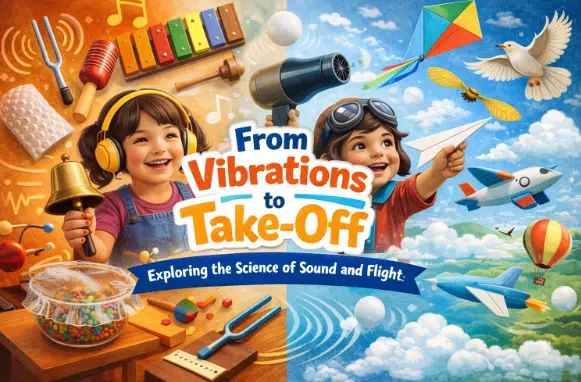


From Vibrations to Take-Off: Discovering the Science of Sound and Flight
Science is all around us, shaping the way we hear, move, and explore the world. Through the Science of Sound and Science of Flight topics, children are introduced to big ideas in physics in a way that feels exciting, accessible, and inspiring. By looking at everyday experiences through a scientific lens, learners begin to understand how the unseen forces of vibration and air create incredible things.
The Science of Sound: Making Sense of What We Hear
Sound starts with something straightforward: movement. Whenever an object vibrates, it causes nearby particles to move too. This movement travels outward as sound waves through air, water, or solid materials, eventually reaching our ears.
Sound waves are known as longitudinal waves. As they travel, particles are gently pushed together and pulled apart, creating patterns of compressions and rarefactions. Our ears pick up these tiny pressure changes and send signals to the brain, which then turns them into the sounds we recognise every day.
What we will learn about sound:
Pitch and Loudness
Not all sounds are the same, and two key ideas help explain why:
- Pitch is linked to how fast something vibrates. Faster vibrations create higher sounds, while slower vibrations create deeper ones.
- Loudness depends on how strong those vibrations are. Bigger vibrations carry more energy and sound louder.
These ideas help explain everything from musical notes to everyday noises.
How Sound Travels
Sound needs a medium to travel through. It cannot move through space, but it can travel through solids, liquids, and gases.
- In solids, particles are close together, so sound travels quickly.
- In liquids, sound moves a little more slowly.
- In the air, sound travels the slowest.
This is why sound can sometimes seem clearer or louder when it travels through walls, water, or strings.
Sound, Distance, and Energy
As sound waves move away from their source, they spread out. This means the energy is spread over a larger area, making the sound quieter with distance. The further a sound travels, the softer it becomes—a simple but powerful idea that helps explain how we experience sound in everyday life.
The Science of Flight: How Air Makes Things Fly
Although we can’t see air, it plays a massive role in how objects move. The Science of Flight explores how air pushes, lifts, and slows objects, allowing them to glide, spin, or float gently to the ground.
What we will learn about flight:
The Forces at Work
Flying and falling objects are affected by four main forces:
- Lift, which pushes upward
- Weight, which pulls downward due to gravity
- Thrust, which moves an object forward
- Drag, which resists motion through the air
Understanding how these forces work together helps explain how flight is possible.
Lift and Wing Shape
Many flying objects use a special shape called an aerofoil. This shape helps air move faster over the top surface and slower underneath. Faster-moving air creates lower pressure, while slower air creates higher pressure, resulting in an upward push known as lift.
At the same time, wings push air downward, and the air pushes back upward. This action-and-reaction is described by Newton’s Third Law and plays a vital role in keeping objects in the air.
Air Resistance and Movement
As objects move through the air, they experience air resistance, also known as drag. Streamlined shapes allow air to flow smoothly, reducing drag, while wider shapes increase resistance and slow objects down.
This idea explains why some objects fall quickly, while others drift slowly. Nature makes excellent use of this principle, from floating seeds to gliding animals, and engineers often take inspiration from these designs.
Inspiring the Next Generation of Scientists
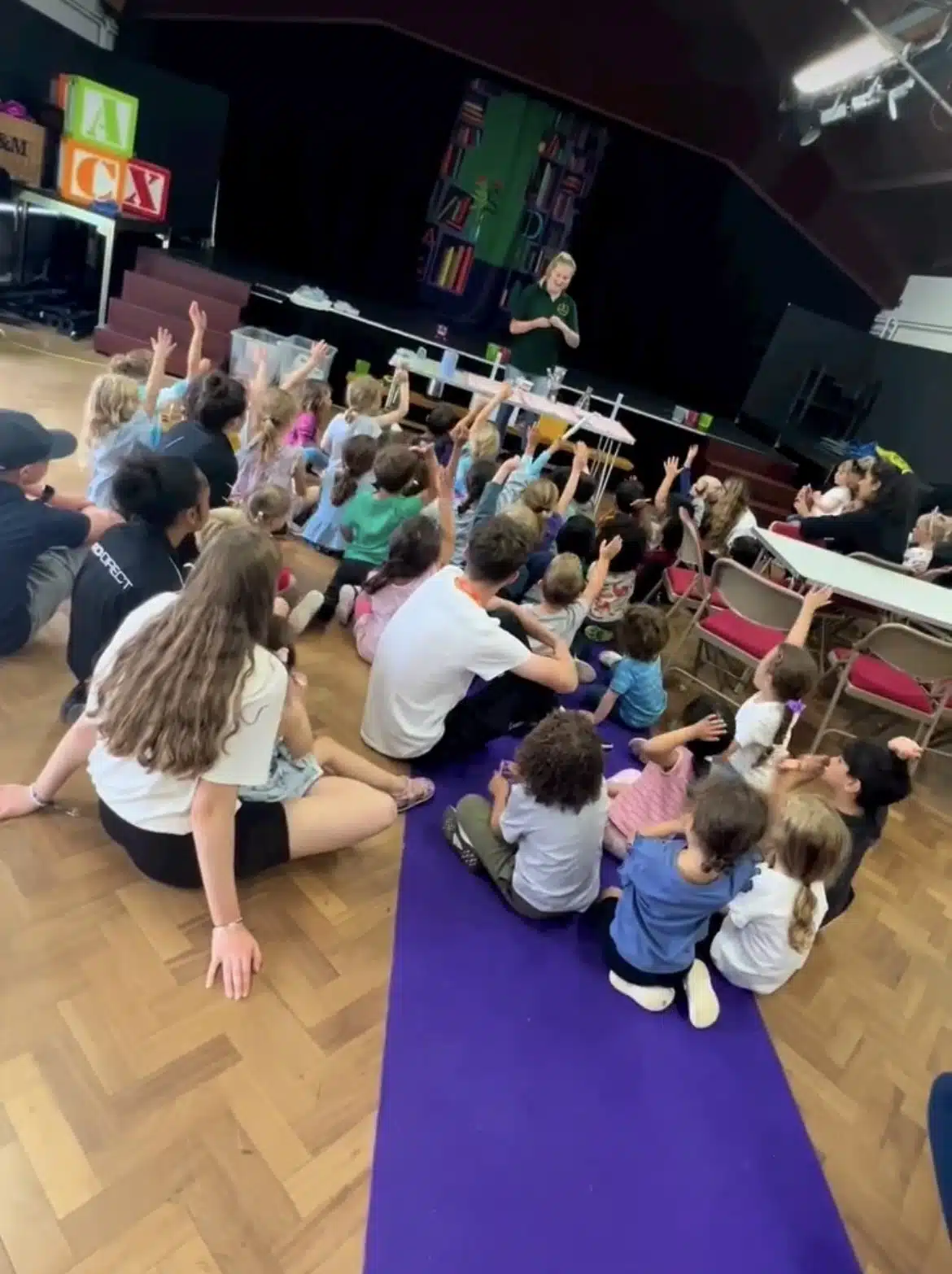
Our Science of Sound and Science of Flight topics are designed to spark curiosity and excitement. By linking scientific ideas to familiar experiences—like hearing a sound or watching something fly—we help children see that science is part of their everyday lives.
We encourage children to ask questions, share ideas, and feel confident exploring how the world works. We aim to inspire a sense of wonder and help every child begin to see themselves as a scientist, a thinker, and a problem-solver.
Contact us now to make a booking for a Science of Sound or Flight Workshop!