

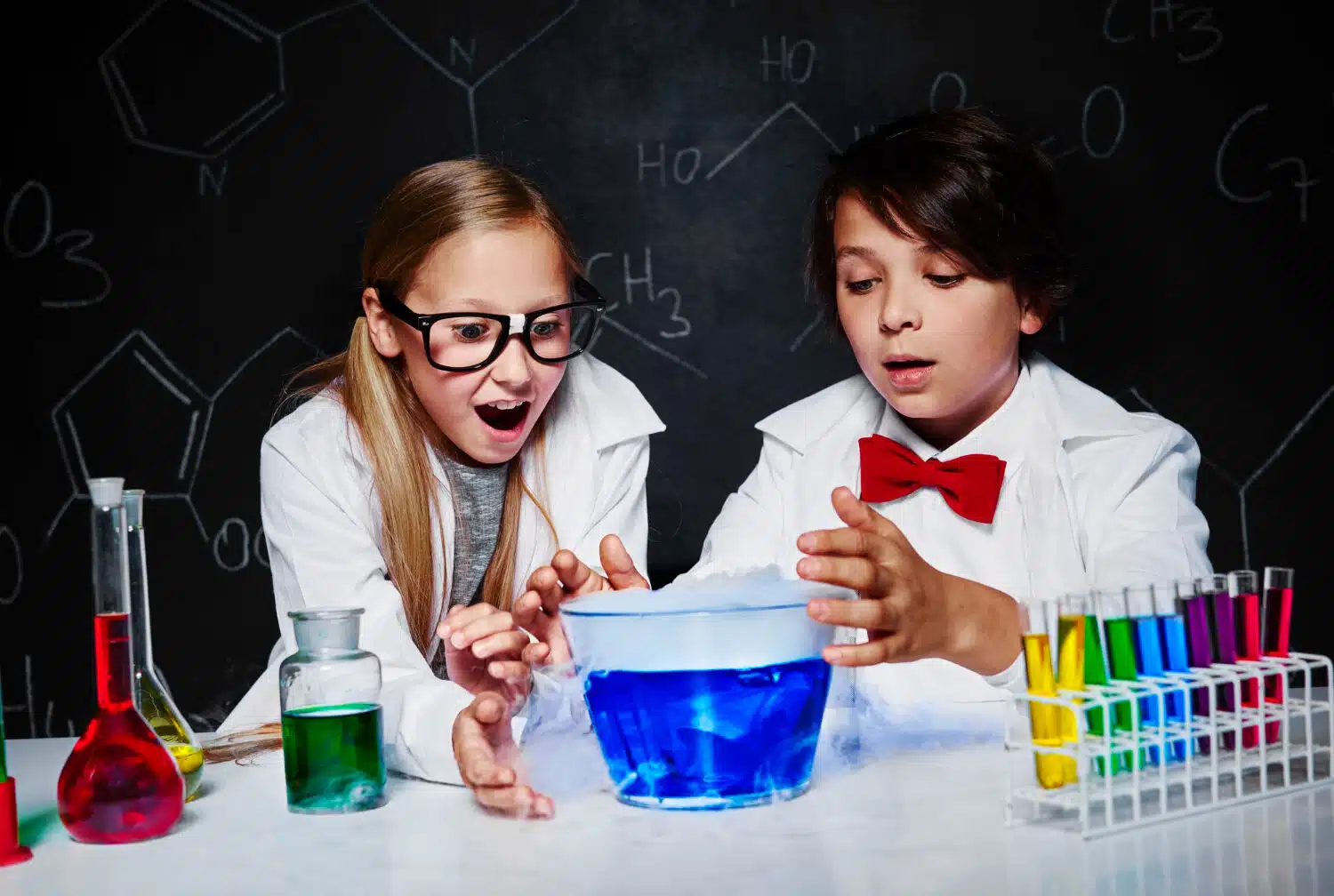


Children's Fun Science Experiments
The term 'children's fun science experiments' offers many opportunities to engage curious young minds and make learning more enjoyable. Science does not only have to be complicated, but it also seeks to explore ideas, make inquiries, and create meaning out of everything. With bubbling reactions or jaw-dropping tricks, the science experiments for kids take the thrill right into homes and classrooms.
Our experiments are simple yet fascinating, and children of different age groups can participate. Now, let’s look at some of the fun activities that are easy to do and can be very educational as well.
To make it more interesting, let us begin with some attractive science activities that help engage children’s attention.
Simple Science Experiments For Kids To Do At Home
Can you picture the thrill of making a very active volcano in the middle of your kitchen or a rocket that is made in the backyard and flies off? These are some of my best funny and interesting science projects for kids. Children enjoy projects that let them engage in activities that help them discover something new.
1. Baking Soda and Vinegar Volcano
A classic science project that uses kitchen ingredients to produce an erupting volcano. What you need includes baking soda, vinegar, some food colour, and a volcano-like container. Put a mixture of baking soda and food colour in the container, then add vinegar and watch the effervescent reaction. This chemical reaction - acid and base - helps in introducing basic chemistry concepts to children.
Want more bubbling fun? Check out our Bubble and Balloons Workshop for interactive science fun!
2. Rainbow in a Glass
Utilise sugar, water, food colouring, and glass or plastic to make a beautiful, layered rainbow in a glass. The kids can use their concentration on the different coloured solutions to learn about density. The heavier liquid sinks to the bottom, while colored liquids of lower density float above each other to form a rainbow.
Science Experiments for Kids to Try at Home
Science extends beyond the laboratory environment. Using a few common household items, children can carry out wonders without leaving the comfort of their homes.
1. Home-made Lava Lamp
Homemade lava lamps can be made using water, oil, food colouring, and Alka-Seltzer tablets. After mixing water and oil in a jar, and putting in the tablets, the children will be able to see coloured bubble fluctuations in the water and learn why oil and water do not mix.
2. Static Electric Balloon Experiment
Exploring static electricity with just a balloon and some household items is very thrilling to kids. If you rub the balloon on their hair or a wool sweater, it gets charged. It is hilarious how such a simple act can allow the balloon to pick up scraps of paper or cause its hair to shake. This experiment is a good way to introduce electrons and static charges engagingly.
For a deeper dive into electricity, our Electricity Workshop for Kids offers interactive and illuminating experiences!
3. Salt and Ice Observation
During winter, salt is used to melt ice, and this experiment helps kids understand why roads are salted. Place an ice cube on a tray and sprinkle salt on one half. Over time, the salted side melts faster, demonstrating how salt lowers the freezing point of water.
Top Science Experiments for Kids
Science projects engage young kids and help them learn useful things. Here are some of the top science experiments that can create memorable moments for children.
1. Invisible Ink Messages
Children can write secret messages using lemon juice, which appears invisible when it dries. Later, they can make the message reappear by gently heating the paper with a lightbulb or iron. This experiment introduces basic chemistry and the concept of oxidation.
2. Magnetic Slime
Slime is always a hit, and with a simple twist, it can become magnetic! By adding iron filings to regular slime, kids can make magnetic slime that reacts to magnets. This experiment is a unique way to explore magnetism and learn about the properties of magnets.
3. The Balloon Rocket
Kids can build a simple rocket using a balloon, a piece of string, and some tape. Inflate the balloon and release it along the string to create a rocket-like effect. This experiment is a fun way to introduce kids to basic physics principles, like thrust and propulsion.
4. Fizz Bang Pop Experiments
For kids who love loud sounds and reactions, our Fizz Bang Pop Experiments workshop provides safe, high-energy experiments that demonstrate the science behind reactions and explosions in a controlled setting.
Fun Science Experiments for Children to be Done at School
Teachers and other instructors may utilise these enjoyable activities in the classrooms, as the students will understand more when the lessons are brought to life. The students will understand more when the lessons are brought to life.
The Egg Drop Challenge
The egg drop challenge is an old-school procedure, where kids undertake the task of shielding an egg from breaking after a drop by creating protective packing around it. It promotes the aspects of problem-solving and creativity, as well as physics concepts such as impact and force distribution.
Making Slime with Cornstarch and Water
A simple mixture of cornstarch and water creates "Oobleck," a non-Newtonian fluid that behaves as both a solid and a liquid. Kids can observe the flow when they move it slowly, but pressure solidifies it. It's a fun science experiment that children can do at school
Colour Changing Milk
All you need for this activity is milk, food colouring, and dishwashing soap. In the first step, put some drops of food colouring on the milk in the bowl. The second step is to dip a cotton swab in dish soap and let it touch the surface of the milk. The colours will combine and swirl, teaching kids about the interactions between soap and fat.
Do you want to do sensory activities? Take a look at our, Sensory Bubbles Workshop which is perfect for active involvement and sensory engagement.
Cloud in a Jar
It is possible to create clouds in a jar by using water, matches, and ice. Light a match and hold it inside a jar of water; then place ice on top of the jar. The water vapour condenses around the smoke particles, forming a tiny cloud inside the jar. This experiment demonstrates how clouds form through condensation.
Our Special Education Needs Workshop provides adaptable science experiences suitable for various learning styles and abilities.
Get in Touch Today!