

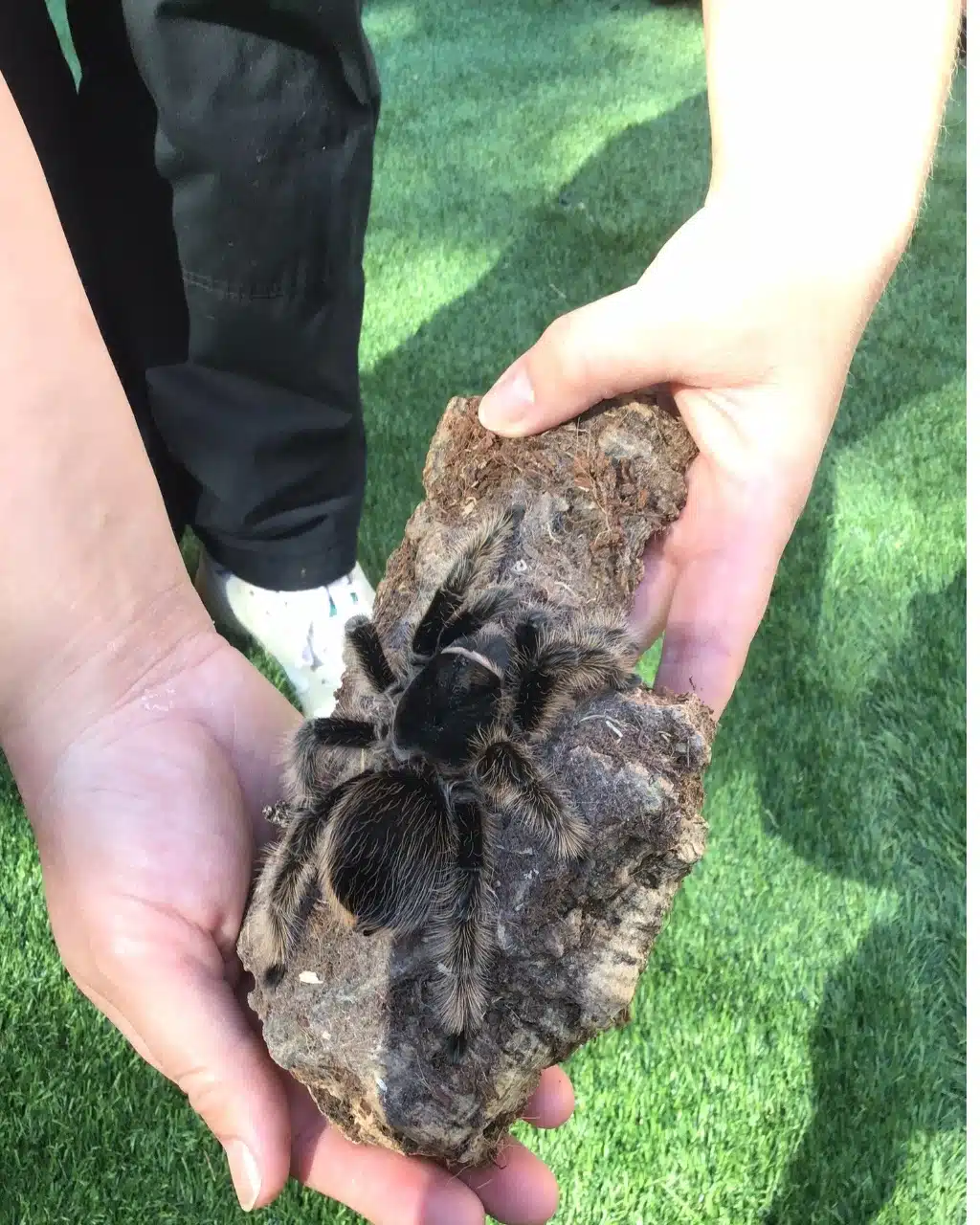


The tarantula is one of the most fascinating creatures in the animal kingdom. Wild Science brings these giant spiders to parties and events all over the UK. Guests can safely observe them up close — and even gently touch them (when trained staff are supervising).
Whether you're hosting a birthday party, school event, or community workshop, our mobile animal handling sessions bring excitement, education, and spine-tingling fun right to your venue. Among our most popular creatures is the tarantula—a gentle, fascinating arachnid that never fails to capture attention.
With their fuzzy bodies, mysterious movements and larger-than-life appeal, tarantulas have become a favourite among children and adults alike. At Wild Science, we offer guests the rare opportunity to handle live tarantulas, as well as enjoy a reptile experience guided by trained animal experts. These up-close encounters make science come alive and help people see spiders in a whole new light.
Not Just a Scary Spider – What Makes Tarantulas So Special?
Many people confuse tarantulas with dangerous or aggressive creatures, but that's far from the truth. Most tarantula species are calm and non-aggressive, especially those we use in our sessions, like the Chilean Rose or the Mexican Red Knee.
Members of the genus Grammostola, such as the Brazilian black tarantula and the Chilean rose tarantula, are also popular beginner choices. These species are known as "beginner tarantulas" in the tarantula hobby world because they are easier to handle and less prone to stress.
Do tarantulas make webs? Spiders are known for spinning, but tarantulas don't produce webs to catch prey.
Recommended beginner tarantulas typically belong to the genus Brachypelma, including the Mexican Red Knee and Mexican Fire Leg. Most female tarantulas can live 10 to 30 years, depending on the species.
Unlike other spiders, tarantulas are much larger and have dense hair covering their body and legs. These hairy spiders use their urticating hairs—tiny barbed bristles—as a defence mechanism. When threatened, they flick these hairs into the air to irritate predators' eyes and skin.
New World vs Old World Tarantulas – What's the Difference?
Tarantulas can be commonly found on every continent except Antarctica, especially thriving in warm, tropical, and subtropical areas like South America, Africa, Asia, Australia, and some parts of North America. These fascinating creatures are truly widespread and adapt well to different environments.
Not all tarantulas are the same! Tarantulas are grouped into two main types based on where they come from: New World and Old World.
- New World tarantulas are native to the Americas (like South and Central America). These species are generally calmer and use special itchy hairs called urticating hairs to defend themselves.
- Old World tarantulas come from parts of Africa, Asia, and Europe. These tarantulas are known for being faster and more defensive. They don't have urticating hairs, but they might give a warning pose or a quick retreat instead.
At Wild Science, we usually bring New World tarantulas to parties and events—they're safer, more docile, and better suited for gentle handling.
Bring a Tarantula to Your Party
Imagine the excitement when a real tarantula comes to your birthday party! At Wild Science, we let guests see, touch and learn about tarantulas in a safe and controlled environment.
Children and adults can gently hold our tarantulas under supervision or watch them up close in their enclosures. Perfect for photos, questions and learning. Our tarantula experiences are for animal lovers, science fans and anyone curious about creatures of the animal kingdom.
Tarantulas make an ideal addition to themed events such as:
- Birthday parties
- Halloween celebrations
- Science fairs
- SEN educational sessions
- School workshops
- Wildlife discovery days
Want to give your guests a wild surprise they'll never forget? Click here to book your animal party with Wild Science. We travel nationwide across the UK!
Everything You Need to Know About the Creepy Tarantula
Our sessions do more than entertain—they also teach! Tarantulas help children understand broader scientific concepts, such as:
- Arachnid anatomy: What makes arachnids different from insects?
- Habitats: Learn where arboreal tarantulas and terrestrial tarantulas live—from trees to burrows.
- Camouflage and defence: Understand how these solitary creatures protect themselves in the wild.
- Feeding habits: Discover how tarantulas capture and eat insects, small frogs, lizards, and even birds in the wild.
These low-maintenance pets are also a great way to introduce children to animal care. Tarantulas require minimal maintenance compared to other pets, making them an excellent choice for those new to exotic animals. Not every child may want a pet tarantula, but learning about them is a unique way to build empathy and respect for animals.
There are also eight eyes on tarantulas, but their vision is poor. Instead, they rely on vibrations and the sensitivity of their leg hairs to detect movement and prey. Their fangs can inject venom, though it's typically mild and medically insignificant to humans. Still, a tarantula bite may feel similar to a wasp sting, which is why we always ensure proper supervision.
Tarantulas require a habitat with a substrate depth and width at least three times their total leg span to ensure their comfort and well-being. Tarantulas can be kept on the same bedding for years as long as the keeper spot cleans and removes food remains.
Some tarantula species exhibit pronounced sexual dimorphism, with males generally being smaller than females. All tarantulas are venomous, but their venom is generally not deadly to humans.
Native Habitats and Worldwide Diversity
According to the Academy of Natural Sciences of Drexel University, there are about 900 known species of tarantulas. Tarantulas can range in size from a fingernail to a dinner plate, with the Goliath bird-eating tarantula being the largest spider on Earth. From the humid rainforests of South America to the dry deserts of Africa and Central America, these spiders have adapted to many different habitats. In the United States, Mexico, Central America, South America, Africa, much of Asia, and all of Australia, tarantulas of different species are found.
As of December 2023, 1,100 species of tarantulas have been identified, which is a lot of variety! Tarantulas are found in the savanna, grassland, rainforest, desert, scrubland, mountains and cloud forest.
There is a tarantula found in the Amazon rainforest called the Goliath Birdeater (Theraphosa blondi), one of the largest tarantulas in the world. It has a leg span of up to 12 inches – one of the biggest spider species on the planet!
Tarantulas in Captivity: Safe and Ethical Care
We ensure that all tarantulas used in our mobile sessions are well cared for. They're housed in secure, temperature-controlled enclosures with the correct humidity and substrate to replicate their natural habitat. Tarantulas need regular weekly feedings of live food items like roaches, crickets, and locusts.
Tarantulas are solitary creatures and are only handled by trained tarantula keepers. During parties, guests can gently touch the tarantula under supervision or watch it in a clear display tank.
We put animal welfare first, and our staff follow strict guidelines to ensure the tarantula never becomes stressed or overhandled.
Who Is This For?
Our tarantula encounters are suitable for people of all ages, including:
- Curious children
- Teens interested in biology
- SEN learners
- Adults with a passion for exotic species
- First-time spider lovers
We adapt our session style to the audience. For younger children, we use storytelling and fun facts. For older students, we go into more technical info about exoskeletons, moulting and reproduction.
Our sessions have received great feedback from teachers, parents and animal lovers across the UK. Many tell us how our visits have sparked new interests in science and nature.
We Come to You!
Our mobile service means we can visit your school, home, or venue anywhere in the UK. Book today and meet our friendly tarantula up close!
Why Wild Science?
- UK-based with nationwide reach
- Fully DBS-checked staff
- Experts in animal education
- Safe, ethical, and exciting experiences
- Trusted by schools, parents, and event organisers
We go beyond entertainment—every interaction is a step into the natural world and a moment to build confidence, knowledge and curiosity.
Customer Testimonials
“We were delighted to have both Shannon & Amy attend our free family event at Crystal Peaks shopping centre this Friday. Their communication on the run-up to our event was great. On the day, the head office called us to check everything was ready & the hosts arrived in plenty of time. We had a lot of very excited guests that got to enjoy a range of fascinating creatures throughout the day. The team were great with the public & very knowledgeable about their little critters. We can't recommend Wild Science enough. Thank you for making our day so good.” - Fantasea Factory“Attended a group with my husband & kids. Youngest being 1 & it was incredible. Different kinds of animals, was able to hold what we could & pet the rest. Thanks again for the incredible experience! Fidget was amazing & we are now thinking if adding ferrets to the family. I hope fidget enjoys his chicken”- Shannagh Aitken
Make Your Next Event Wild!
Whether you're planning a party, school workshop, or fun community event, let Wild Science bring a tarantula and other amazing creatures to you. With our unique blend of science, fun, and interaction, we'll help you create unforgettable memories for every guest.
Click here to book your Tarantula Encounter with Wild Science today
Or call us directly for more information.
Explore Related Experiences: