



Science sticks when children can see it happen. Fun science experiments turn big ideas into something they can fizz, pour, pop, and watch. This page shares 13 easy science experiments for kids, with simple steps and the science explained in plain language. They are great for science kids who love to ask why.
Most of these hands-on science experiments use everyday household objects. If you like to plan ahead, they also pair well with a kids science experiments book from your local library. You can try them at home, in a classroom or at a family event. Each one is a simple experiment that helps young learners ask questions, make predictions and spot patterns.
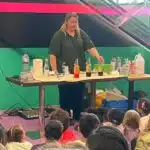
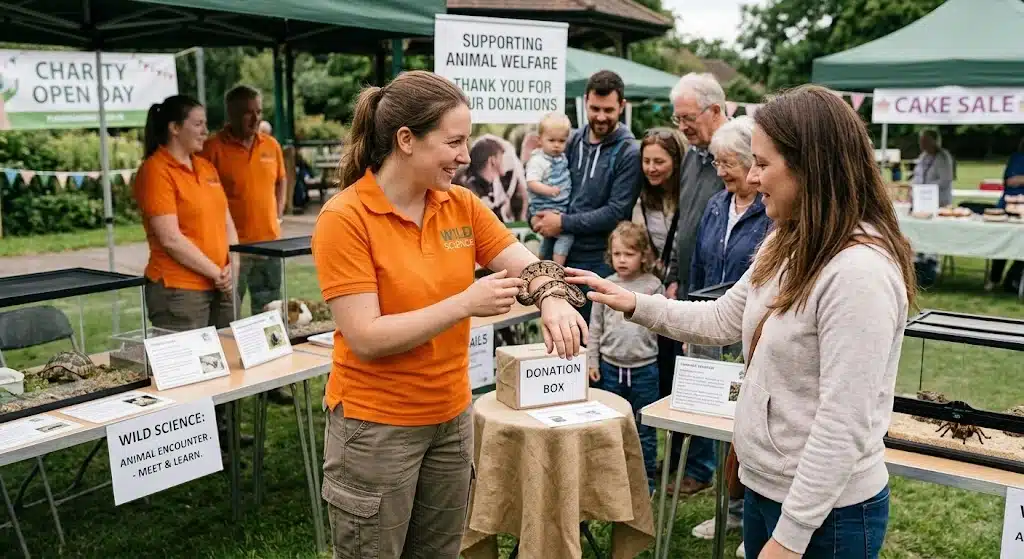
At Wild Science, we deliver hands-on science workshops across the UK for schools, families and community groups. These ideas give you a taste of what we do.
Safety First: Before You Start
Adult supervision is recommended for all of these science experiments. Read the steps before you begin and gather your materials first. A few tips make the fun last longer:
- Use safety goggles for fizzing, spraying, or heating activities.
- Keep hot water, heat sources, and sharp objects with an adult.
- Lay down a tray or old towel to catch spills.
- Never taste the materials, even when they come from the kitchen.
13 Easy Science Experiments for Kids to Try at Home
Each experiment below lists what you need, what to do, and the science behind it. Pick one that suits your age group and your materials. Older children can add a hypothesis, record results, and change one thing at a time to build critical thinking.
Chemical Reactions Experiments With Carbon Dioxide Gas
Chemical reactions happen when substances combine to make something new. These three experiments show the changes clearly.
1. Baking Soda and Vinegar Volcano: A Classic Experiment
The baking soda volcano is a classic experiment because it is quick, loud and easy to set up. Baking soda is cheap, safe and found in most kitchens, so it is perfect for easy science experiments at home.
You will need: baking soda, vinegar, a tall glass or bottle and a tray. You also need a few drops of red food colouring.
What to do: Put two spoonfuls of baking soda in the container. Add a few drops of food colouring to the vinegar, then pour it in. Stand back and watch the foam rise. Add more baking soda to see a bigger eruption. Try a baking soda and vinegar volcano outdoors for easier cleanup.
The science: Baking soda (sodium bicarbonate) and vinegar (acetic acid) react to produce carbon dioxide gas. The carbon dioxide bubbles push the foam up and out. This experiment demonstrates how chemical reactions between an acid and a base can make gas.
Want bigger bangs? Wild Science also runs interactive Fizz Bang Pop science workshops.
2. Homemade Lava Lamp
A homemade lava lamp shows how oil and water behave differently.
You will need: a clear plastic bottle, vegetable oil, water, food colouring and an Alka-Seltzer tablet.
What to do: Fill the bottle about three-quarters full with vegetable oil. Top it up with water, leaving a little space. Add a few drops of food colouring, then drop in a broken tablet piece and watch.
The science: Oil and water do not mix because they have different densities. The oil floats on top. The tablet starts chemical reactions with the water that make carbon dioxide bubbles. The bubbles lift coloured water up through the oil. When the bubbles pop at the surface, the water sinks back down.
3. Invisible Ink Messages
Invisible ink makes science feel like a secret mission.
You will need: lemon juice, a little water, a cotton swab, white paper, and an adult to handle the heat.
What to do: Mix lemon juice with a little water. Write a message with the cotton swab and let the paper dry. An adult then holds the back of the paper near a warm incandescent bulb. They keep the paper moving and away from the glass until the writing turns brown.
The science: Lemon juice contains acids, such as ascorbic acid, that turn brown when heated. The rest of the paper stays pale, so the hidden message appears. Heat speeds up these simple chemical reactions. Because heat is involved, an adult must handle this step.
Colour Mixing, Density and Surface Tension
Water is brilliant for science. These three experiments use food colouring to make invisible ideas easy to see.
4. Rainbow in a Glass: Different Densities
This colourful experiment shows how liquids with a different weight for their size stack on top of each other.
You will need: sugar, water, food colouring, a tall clear glass, a spoon and clear plastic cups.
What to do: Mix a different amount of sugar into water in each cup. Add a different food colouring to each. Slowly pour the liquids into the tall glass, starting with the sweetest.
The science: More sugar makes a liquid denser, or heavier for its size. Denser liquids sink lighter ones below, and objects float in a liquid that is denser than they are. Pour carefully, and the liquids form separate layers. The layers create the rainbow effect.
5. Walking Water: Capillary Action and Colour Mixing
Walking water is a favourite colour mixing activity. It needs only glasses, water and paper towels.
You will need: three clear glasses, paper towels, water, red and yellow food colouring, and a spoon.
What to do: Line up the glasses and fill the first and third with water. Add red to one and yellow to the other. Fold two paper towel strips. Put one end of each strip in a full glass and the other end in the middle glass. Check back after a few hours.
The science: This is capillary action. Water molecules stick to each other and to the paper towel fibres. The water climbs through the tiny gaps in the paper towels. It then flows into the empty glass, where the colours mix to make orange.
6. Colour Changing Milk
Colour-changing milk, sometimes called magic milk, creates swirling patterns in seconds. It is a fun way to see how soap acts on fat.
You will need: milk, a shallow dish, food colouring, dish soap, and a cotton swab.
What to do: Pour milk into the shallow dish. Add a few drops of different food colouring. Dip the cotton swab in dish soap and touch it to the middle of the milk.
The science: This experiment demonstrates how dish soap changes the surface tension of the milk. Soap molecules interact with the fat molecules and rush through the liquid. The dish soap keeps moving until it runs out of fat to reach. The moving fat pushes the colours around, which creates the swirls.
Basic Principles of Physics: Air Pressure and Static Electricity
These activities use invisible forces. They are a hands-on way to explore the basic principles of physics.
7. Balloon Rocket
A balloon rocket is a brilliant way to explore forces and motion.
You will need: a balloon, a straw, string, tape, and two chairs.
What to do: Thread the string through the straw and tie it between two chairs. Blow up the balloon without tying it and tape it to the straw. Let go and watch it zoom along the string.
The science: The air pressure inside the balloon is higher than outside, so air rushes out in one direction. That pushes the balloon the opposite way. Try different balloon sizes and string lengths to see what changes the speed.
8. Static Electricity Balloon Experiment
Static electricity is easy to see with just a balloon. This experiment introduces children to electrical charge.
You will need: a balloon, small pieces of tissue paper and a woolly jumper or your hair.
What to do: Rub the balloon on your hair or jumper for about ten seconds. Hold it just above the tissue paper and watch the pieces jump.
The science: Rubbing moves tiny charged particles called electrons onto the balloon. The charged balloon then attracts light objects.
For schools wanting to go further, Wild Science delivers electricity workshops for different age groups.
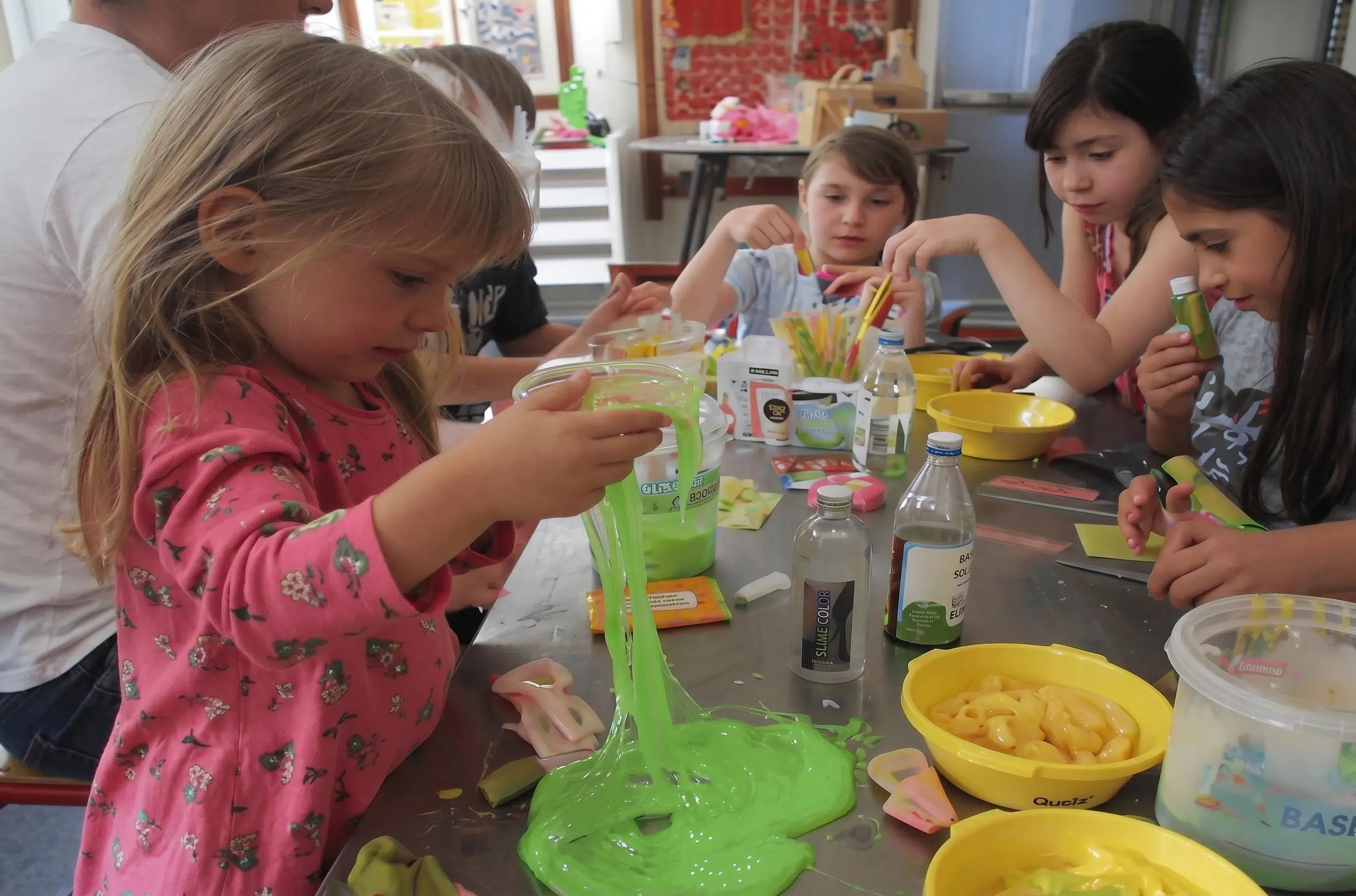
9. Magnetic Slime
Magnetic slime adds a surprise to classic slime.
You will need: PVA glue, liquid starch, water, black iron oxide powder and a strong magnet. A neodymium magnet works well.
What to do: An adult mixes the glue, starch and water into slime, then stirs in the iron oxide powder. Hold the magnet near the slime and watch it stretch towards it.
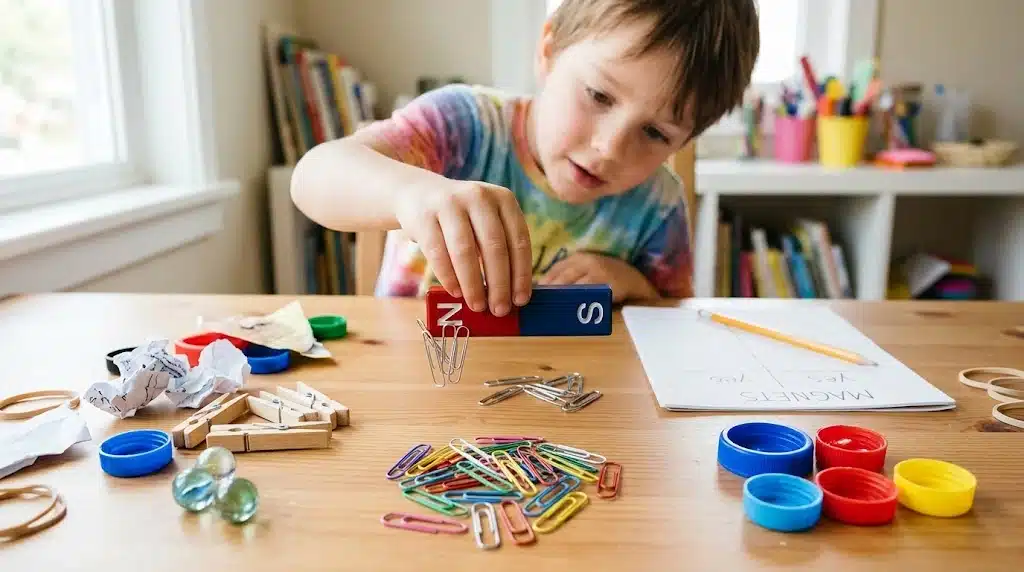
The science: The iron oxide powder is magnetic, so the slime is pulled towards the magnet. Magnets attract certain materials, while non-magnetic objects such as plastic are not affected. Test different materials to see which ones are pulled. Keep strong magnets away from young children, because they can be dangerous if swallowed.
Looking for more slime ideas? Try our science of slime for kids page, or see how magnets work in the science of forces and magnets.
10. The Egg Drop Challenge
The egg drop challenge builds creativity, teamwork, and problem-solving. This experiment introduces children to simple engineering.
You will need: a raw egg, paper, cardboard, a plastic bag, rubber bands, tape, and small objects to use as padding.
What to do: Design a package that protects the egg. Drop it from a safe height onto a hard floor or tray and see if the egg survives.
The science: The package spreads out the force of the landing and slows the egg down. Children learn about gravity, impact and shock absorption. There is no single right answer, so every design is worth testing.
Ice, Materials and Weather
The last three ideas explore how materials change and how nature works.
11. Salt and Ice Experiment
This simple science activity shows how salt affects ice.
You will need: two ice cubes, salt, and two plates.
What to do: Place an ice cube on each plate. Sprinkle salt over one ice cube and leave the other plain. Watch the salted ice cube melt faster.
The science: Salt lowers the freezing point of water, which makes the ice melt faster. This is why roads are gritted with salt in icy weather.
12. Oobleck: Cornstarch and Water
Oobleck is made from cornflour (cornstarch) and water, and it behaves in an odd way.
You will need: cornflour, water, a bowl and a spoon.
What to do: Mix about two parts cornflour to one part water. Press the mixture quickly, and it feels solid. Let it rest and it flows like a liquid.
The science: Oobleck is a non-Newtonian fluid, which means it behaves differently when force is applied. This makes it a great choice for sensory learning and for testing different materials by feel.
13. Cloud in a Jar
Making a cloud in a jar helps children see how clouds form.
You will need: a glass jar with a lid, hot water, ice cubes and hairspray. An adult should handle the hot water and the hairspray.
What to do: Pour a little hot water into the jar and swirl it. Place the lid upside down on top with ice cubes on it. Add a quick spray of hairspray, replace the lid and watch a cloud form. Lift the lid to let it out.
The science: Warm water makes invisible water vapour that rises and meets the cold air. The water vapour condenses into tiny droplets around the hairspray particles. In nature, water vapour condenses around tiny particles in the air, such as dust.
Critical Thinking and Curiosity: What Children Learn
Hands-on learning helps children remember ideas. Science experiments like these also turn passive learning into discovery. These hands-on activities make science fun while encouraging curiosity and confidence. They also build critical thinking, teamwork, and problem-solving.
Each one is an educational experience that links scientific concepts to everyday life. Children start to see how science concepts such as density and surface tension work around them.
Older children can go further. They can predict the result, change one thing at a time and record what happens. This is the basic scientific method.
If you enjoyed these, our easy science experiments for children page has more ideas. You can also explore the wider range of Wild Science experiments and our Special Education Needs workshop.