



More about States Of Matter Workshop For Kids
Where Molecules Dance and Science Comes Alive!
Hire States of Matter Workshop for School Kids
Bring science to life with Wild Science's interactive States of Matter Workshop. This states of matter workshop for kids is designed to inspire a love of science in young learners. Through exciting states of matter experiments, children discover how solids, liquids, and gases behave. Hands-on demonstrations and engaging activities make science memorable.
Our curriculum-aligned workshop suits KS1, KS2, KS3, and KS4. It helps pupils understand particle behaviour, changing states of matter, and real-world scientific processes through fun, interactive learning.
Ready to inspire your pupils? 👉 Click here to check availability and pricing.
Why Book Our States of Matter Workshop?
Our States of Matter Workshop turns tricky science ideas into exciting, hands-on learning.
Instead of simply reading about science, children actively investigate how matter changes between solid, liquid, and gas states. Every demonstration encourages curiosity, discussion, and participation while supporting the National Curriculum.
Whether you're planning a Science Week, STEM Day, enrichment event, or classroom workshop, our experienced presenters are ready to help. They deliver an unforgettable educational experience that pupils will remember long after the session ends.
What Are Solids, Liquids and Gases?
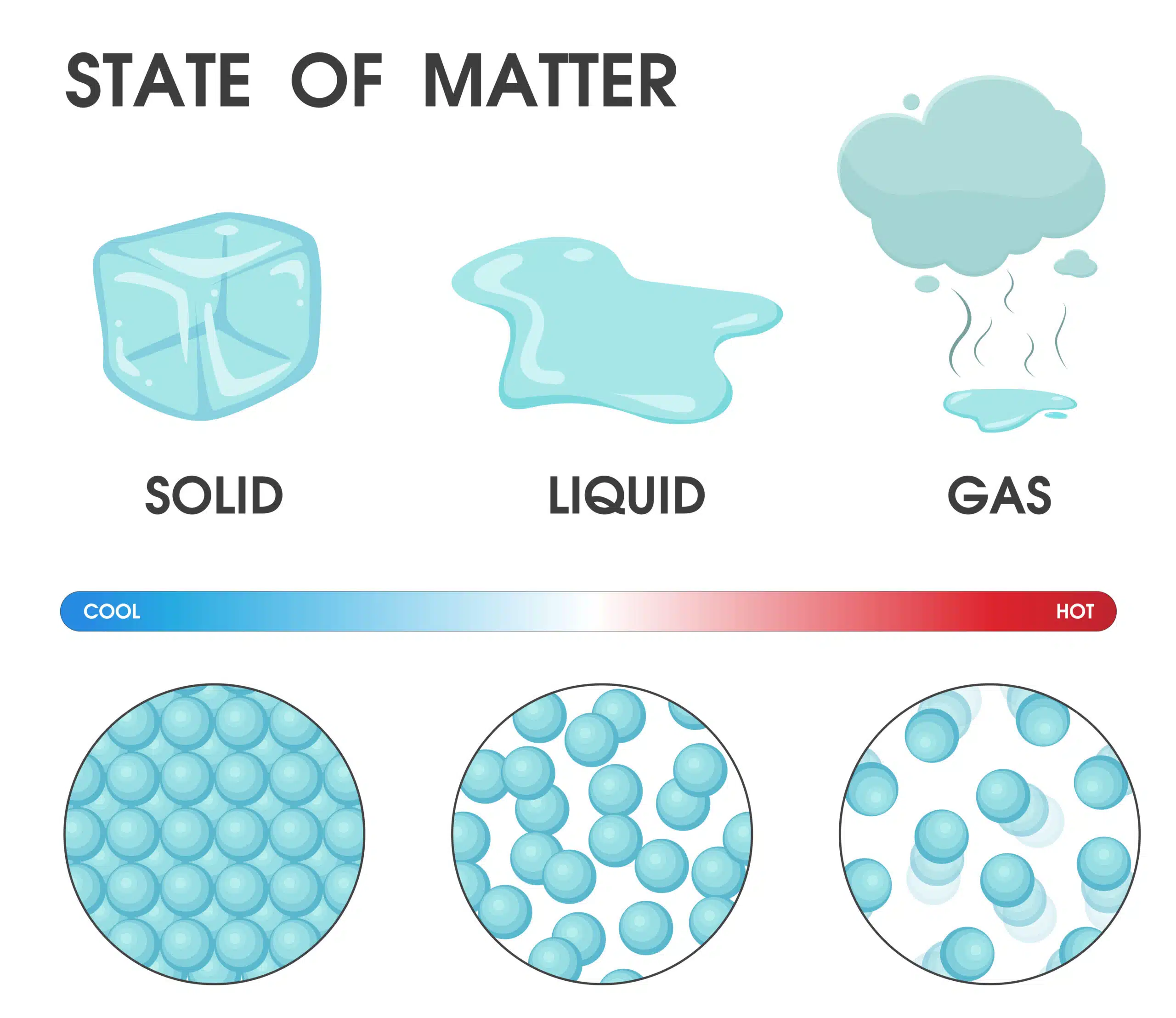
Every substance is made of tiny particles. They are so small that they can't be seen with the naked eye. Particles are arranged differently in solids, liquids and gases. How they move gives each state of matter its own properties.
Solids have a fixed shape and a fixed volume. Their particles vibrate in place but do not slide past each other. As a result, solids stay the same shape unless something cuts or breaks them. Common solids include sand, salt, sugar and flour, and each one has its own texture and shape.
In liquids, particles sit close together but can slide past each other. This lets a liquid change shape to fill the bottom of its container, with a flat surface on top. Even so, it keeps a fixed volume. Honey and milk are both liquids, but honey flows more slowly because its particles are packed more tightly together.
Gases like oxygen and helium have no fixed shape or volume at all. Their particles move freely in all directions and need plenty of space to move around in. As a result, gases always spread out to fill their container completely, whether that's a balloon or a room.
This is why solids, liquids and gases behave differently, even though they can be made of the same substance. Water, for example, can exist in three different states depending on its temperature.
States of Matter Experiments for Kids
Children learn about matter through exciting solid, liquid, and gas experiments. Interactive states of matter experiments demonstrate how particles behave.
During the workshop, they explore:
- Solids, liquids and gases
- Particle movement
- Melting and freezing
- Evaporation and condensation
- Reversible changes
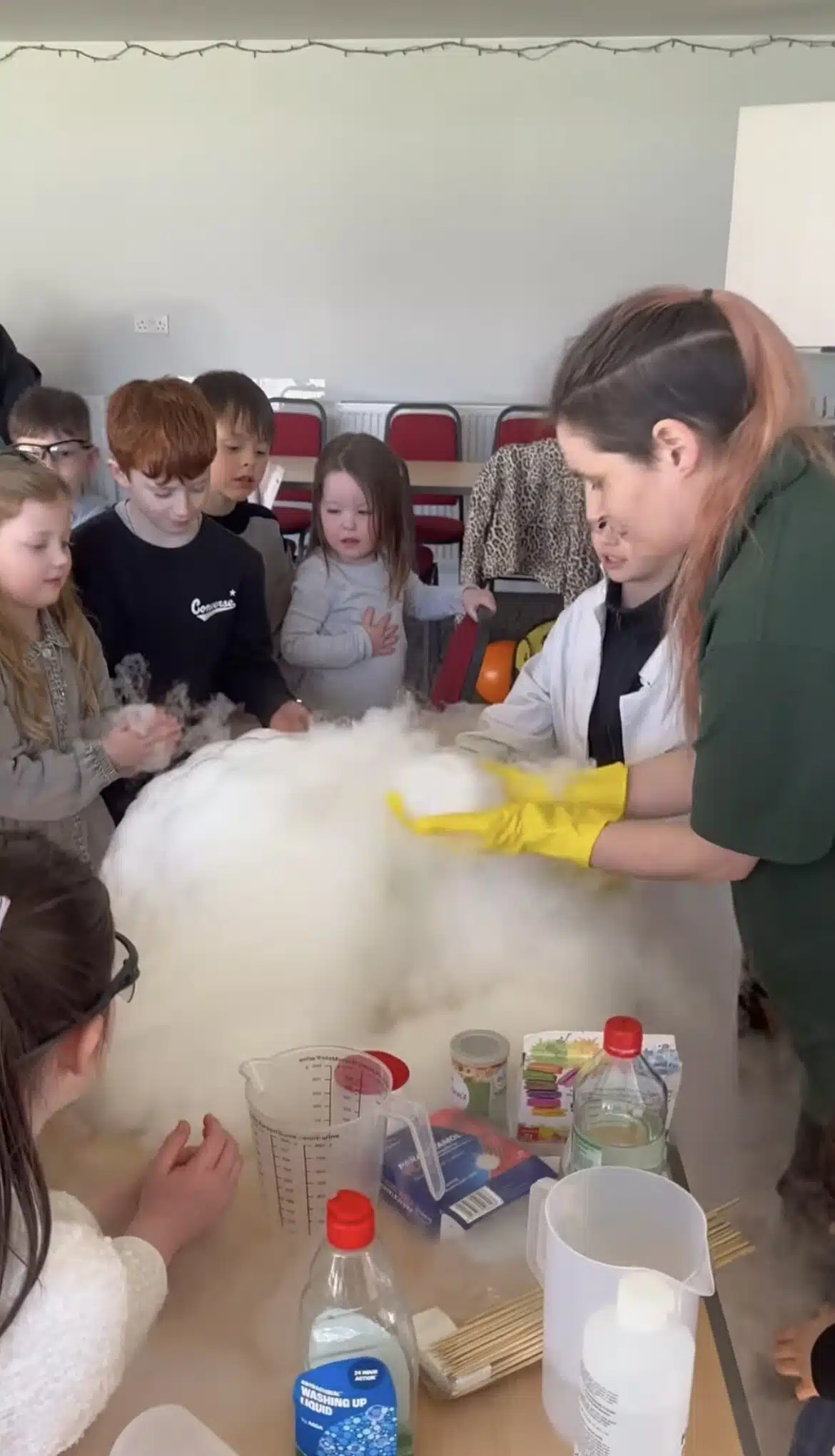
- Sublimation using dry ice
Each experiment is designed to make scientific concepts simple, visual and easy to understand.
Changing States of Matter Experiments
Children don't just learn about solids, liquids and gases; they observe how matter changes from one state to another.
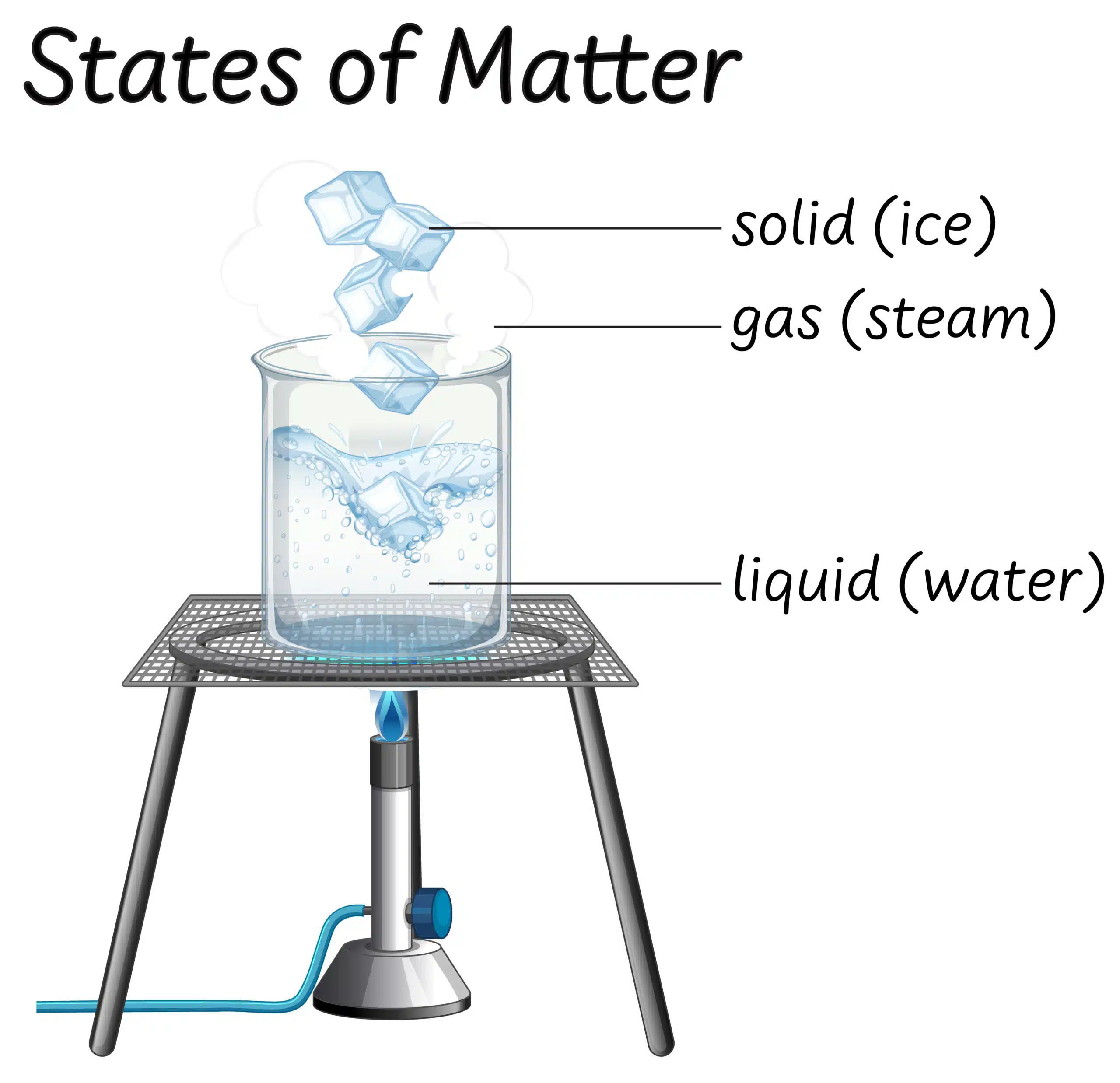
Water turns to ice at its freezing point. A gas forms when it turns to steam at its boiling point. Heating adds energy, so particles move faster and the temperature rises. Cooling removes energy, so particles slow down again.
When liquid water evaporates, it turns into water vapour. When water vapour cools, it condenses back into liquid water again. This process is part of the water cycle that brings us rain.
Throughout the workshop, they also investigate:
- Ice melting into water
- Steam condensing back into liquid
- Dry ice sublimation
Dry ice is frozen carbon dioxide. It turns straight from a solid into a gas in a process called sublimation. These changing states of matter experiments reinforce key curriculum topics through exciting visual demonstrations.
Physical Changes vs Chemical Reactions
Melting, freezing, evaporating and condensing are physical changes, not chemical reactions. The physical properties of a substance, such as its shape or volume, can change. However, the substance itself stays the same.
A chemical reaction is different, because it creates a new substance that did not exist before. Other examples of physical changes include dissolving sugar in water and squashing dough into a new shape. No new substance forms in either case, so neither one is a chemical reaction.
Scientists also study how pressure affects matter. Squeezing a gas into a smaller space increases the pressure inside it. Most gases, including the air around us, are invisible. Even so, their particles are moving all the time, whether we can see them or not.
States of Matter Activities for Children
Our workshop combines demonstrations with interactive states of matter activities that keep every child involved.
Activities include:
- Interactive particle movement games
- Group demonstrations
- Prediction challenges
- Scientific observations
- Question-and-answer activities
- Hands-on investigations
Children actively take part throughout the session, so learning stays both enjoyable and memorable.
Curriculum-Aligned Learning (KS1–KS4)
Every workshop is adapted to match the age and ability of your pupils.
KS1 & KS2
- Identify solids, liquids and gases
- Observe simple changes of state
- Explore everyday examples
KS3 & KS4
- Investigate particle theory
- Understand energy transfer and how mass stays the same as matter changes state
- Explain reversible and irreversible changes
- Explore advanced scientific concepts
Our presenters adjust the activities and explanations to suit each year group.
Why Schools Choose Wild Science
Schools across the UK choose Wild Science because we combine education with entertainment.
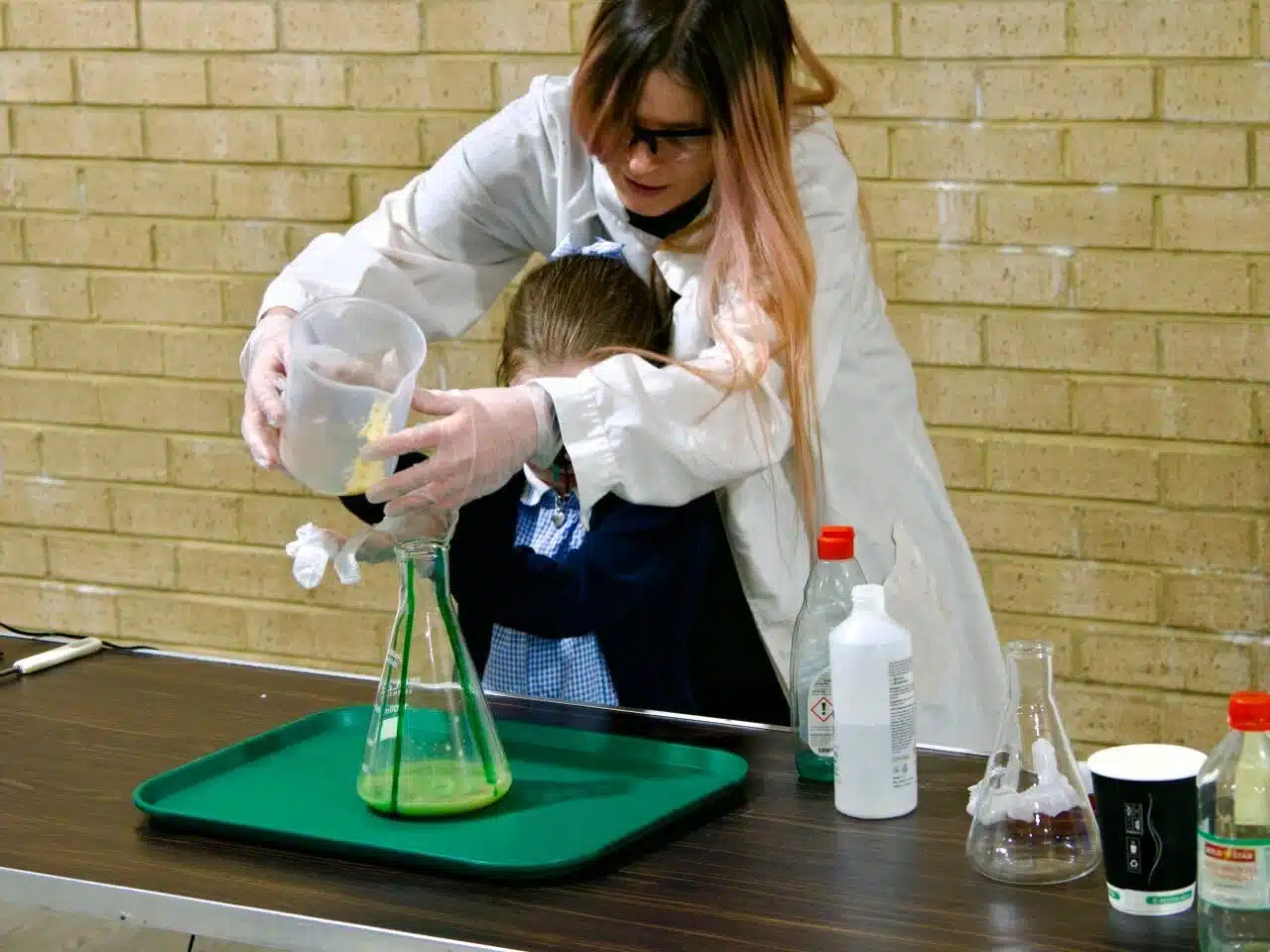
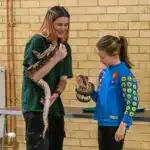
Presenters such as Char and Jazz, two of our trained specialists, help run our States of Matter workshops. Our workshops are:
- Curriculum aligned
- Interactive and hands-on
- Delivered by experienced science presenters
- Suitable for Science Weeks, STEM Days and enrichment events
- Adaptable for different year groups
- Available nationwide
We make challenging scientific concepts enjoyable while supporting teachers in delivering engaging science lessons. Families can explore the topic further at home, too. The BBC Bitesize guide to states of matter is a good place to start.
Download Free States Of Matter Activity Sheets
Expertise & Safety
Wild Science has over 10 years of experience delivering educational science workshops throughout the UK.
Our presenters are:
- Enhanced DBS checked
- Covered by public liability insurance of at least £5 million
- Experienced in working with schools
- Trained to deliver engaging STEM workshops safely
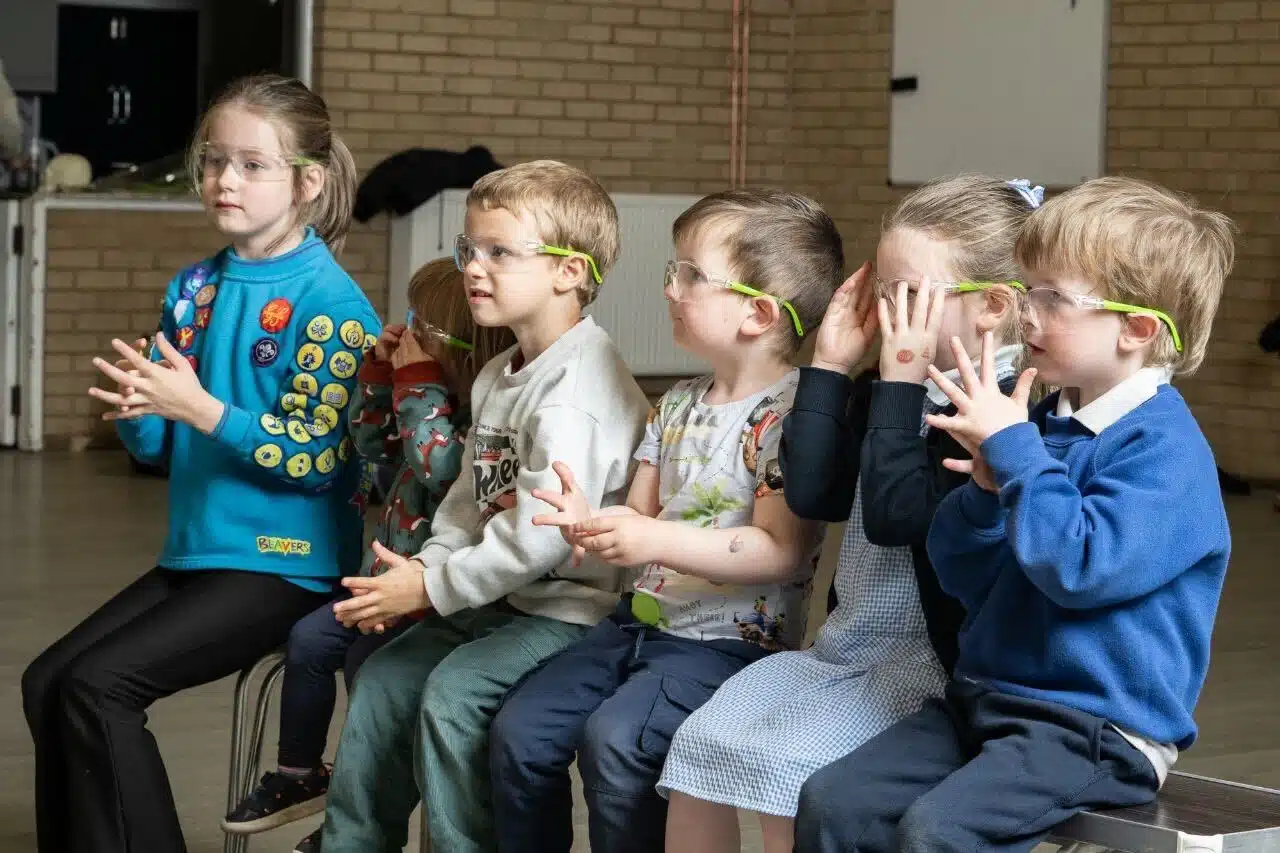
Children wear appropriate safety equipment where required, and all specialist materials, including dry ice, are handled only by trained presenters.
Recommended Session Duration & Ages
Our States of Matter Workshop is suitable for pupils of all ages.
Sessions typically last 45-60 minutes, with multiple sessions available for larger schools, Science Weeks and STEM events.
Book Your States of Matter Workshop
Looking for an engaging science workshop for schools that inspires curiosity and supports the curriculum?
Wild Science delivers exciting States of Matter Workshops packed with hands-on experiments, interactive activities and unforgettable demonstrations.
Our workshop combines exciting matter experiments for kids with curriculum-linked learning, giving pupils a memorable introduction to chemistry and physics.
Whether you're organising a Science Week, STEM Day, enrichment event or classroom workshop, we're ready to help. We'll bring science to life for your pupils.
Contact Wild Science today to book your States of Matter Workshop anywhere in the UK. We have proudly served primary and secondary schools across the UK, including London, Kent, Manchester, and Glasgow.
Frequently Asked Questions
What are the three states of matter?
The three states of matter are solid, liquid and gas, and particles behave differently in each one. They vibrate in place in a solid, slide past each other in a liquid, and move freely in a gas. Children explore all three through practical demonstrations during the workshop.
What is a simple definition of a state of matter?
A state of matter is simply the form a substance takes. It depends on how closely its particles are packed and how freely they move. The three most familiar states, solid, liquid and gas, come alive in our hands-on workshop.
What are the 7 states of matter?
Most school science covers the three familiar states: solid, liquid and gas. Scientists also recognise more unusual states, such as plasma, at very high temperatures or pressures. Our workshop focuses on the three states pupils need for KS1 to KS4, with plasma introduced briefly where age-appropriate.
What happens during the States of Matter Workshop?
Children take part in interactive states of matter experiments and investigate particle behaviour. They observe changing states of matter such as melting, freezing and evaporation. They also explore real-world examples like the water cycle and dry ice sublimation.
Is this workshop suitable for different age groups?
Yes. Every session is adapted for KS1, KS2, KS3 and KS4, so activities and explanations stay appropriate for the pupils attending. Younger children focus on simple observations, while older pupils explore particle theory and energy transfer.
Are the experiments safe?
Yes. Safety is our highest priority, and all demonstrations are supervised by experienced, DBS-checked presenters. Specialist materials such as dry ice are handled only by trained staff, and children wear safety equipment where required.
Can the workshop support Science Week or STEM Day?
Absolutely. Our States of Matter Workshop is a popular choice for Science Weeks, STEM Days, enrichment activities and curriculum-focused classroom learning. It works equally well as a stand-alone session or as part of a wider event.
Try These Simple States of Matter Experiments at Home or School
Want to continue learning after our workshop? Here are three simple states of matter experiments for kids that teachers and parents can safely try.
1. Melting Ice Experiment
Freezing water overnight makes the ice cubes for this experiment. Place several of them in different locations, such as indoors, outdoors, or in warm water.
Ask children:
- Which melts first?
- Why does temperature affect melting?
This experiment demonstrates how a solid changes into a liquid as it heats up.
2. Evaporation Experiment
Pour a small amount of water into two plates.
Place one in sunlight and one in the shade.
Observe which plate dries first, then discuss how heating speeds up evaporation.
3. Balloon Expansion Experiment
Place an empty balloon over the top of a bottle.
Put the bottle in warm water.
Watch the balloon slowly inflate as the air inside expands and takes up more space.
This introduces children to how gases respond to heat.
These simple matter experiments for kids reinforce the same scientific concepts explored during our workshop. They also encourage curiosity at home or in the classroom.
Get a better understanding of states of matter: solids, liquids, and gases. It's perfect for schools.
Please fill in all fields. We will contact you as soon as possible to clarify the details and answer all your questions.