



More about Animal Classification Workshop for Schools
Why Schools Choose Wild Science Animal Classification Workshop
Schools across the UK choose Wild Science because we combine education with real-life experiences. Our Animal Classification Workshop for Schools offers a unique way for students to engage with the animal kingdom. They learn through direct experience, not just textbooks.
Our experienced animal handlers deliver engaging science workshops that support curriculum learning. Students stay actively involved throughout the session.
By using live animals, we help children connect with science in a way that traditional classroom learning cannot always achieve. Students can ask questions, make observations, and learn through direct interaction with animals. From tiny insects to large mammals, every session features genuinely different animals.
This makes our Animal Classification Workshop an excellent choice for science weeks, enrichment days, STEM events, and curriculum-focused learning activities.
Expert-Led, Inclusive Education
Our workshops are delivered by a team of qualified professionals, including zoologists and Bio-Veterinary Science graduates. This ensures your curriculum support is rooted in academic rigour.
Inclusive & Confident Learning
We are committed to making science accessible to all students. Our presenters are trained in SEN (Special Educational Needs) support and utilise proven phobia-reduction techniques. As a result, even students with initial fears of animals can participate confidently and safely.
What Is Animal Classification?
Animal classification is the way scientists sort every living creature into groups. Scientists group animals by shared characteristics, body plans, and evolutionary relationships. This matters because animals come in such an huge range of shapes and sizes.
All animals belong to the domain Eukarya and the kingdom Animalia. From there, scientists have identified more than a million animal species and organised them further. Every animal handled in this workshop still belongs to the kingdom Animalia, alongside millions of other animals.
Carl Linnaeus created this classification system in the 18th century. His classification system uses seven main levels, in order: kingdom, phylum, class, order, family, genus, and species. This classification system still guides scientists today.
Each level narrows the group down further. A class groups animals that share key body plans, while a family groups closely related genera together. For example, lions and tigers are closely related animals within the same family, Felidae. Dogs, wolves, and foxes share a different family, Canidae.
Every species also gets its own two-part scientific name. Scientists across the world rely on these scientific names. Sharing the same scientific names avoids confusion between similar-looking species, and this naming system is called binomial nomenclature.
The Classification of Animals: Vertebrates and Invertebrates
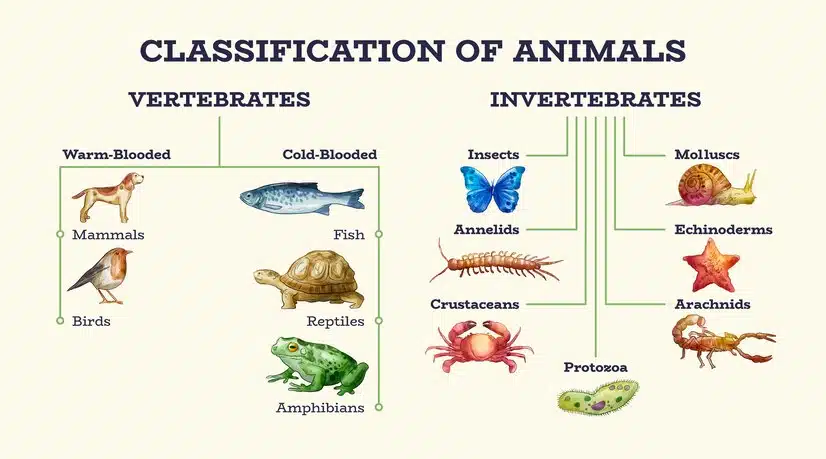
Understanding the classification of animals starts with one big idea. Scientists split all animals into two main groups: vertebrates and invertebrates. This is one of the first ideas we introduce during the workshop.
Vertebrates are animals with a backbone, including fish, mammals, birds, reptiles, and amphibians. Invertebrates do not have one. Perhaps surprisingly, invertebrates are the vast majority of all animals on Earth, making up around 97% of every known species.
This basic split is the backbone of the classification of animals taught throughout UK primary schools. It helps scientists and pupils compare animals accurately at a glance.
The Five Vertebrate Classes
Vertebrates are divided into five main classes of animals, and each class has its own defining characteristics. Mammals and birds are warm-blooded, which means these animals can control their own body temperature. Reptiles, amphibians, and fish cannot, so these animals rely on their surroundings instead. Fish were some of the first vertebrates to evolve, long before mammals or birds appeared on land.
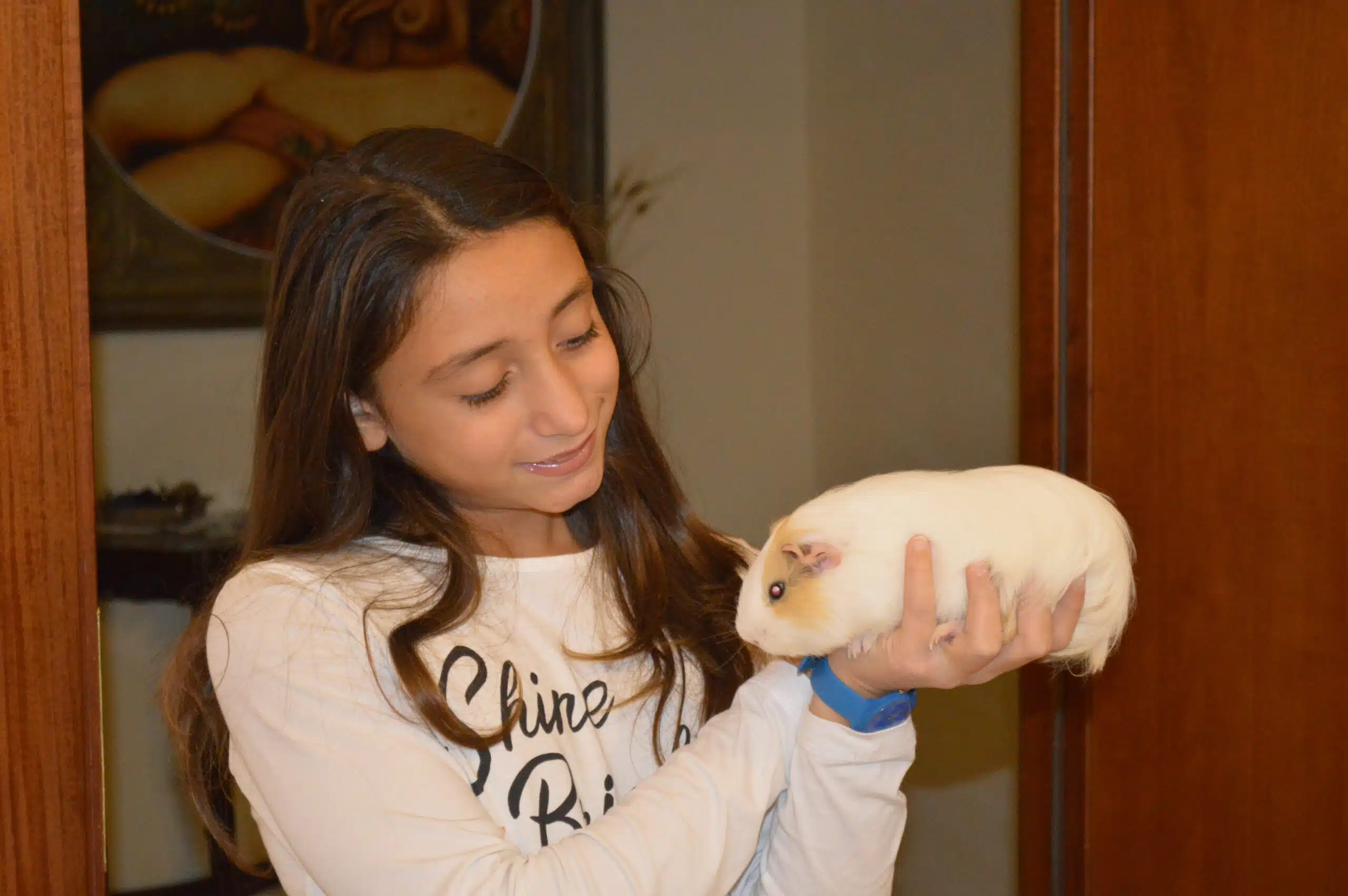
- Mammals belong to the class Mammalia. These warm-blooded animals breathe air, and mammal mothers produce milk for their young. Most mammals also have four legs, though whales and dolphins do not. Familiar mammals include dogs, guinea pigs, and humans, alongside wild mammals such as tigers. Guinea pigs even belong to their own rodent family, Caviidae.
- Birds make up the class Aves. These warm-blooded animals also have feathers, and a bird lays eggs with a hard shell. Birds range from tiny hummingbirds to towering ostriches, and hollow bones help many of these animals fly.
- Reptiles belong to the class Reptilia. These cold-blooded vertebrates have dry, scaly skin. A reptile usually lays eggs too, and snakes are reptiles with no legs at all.
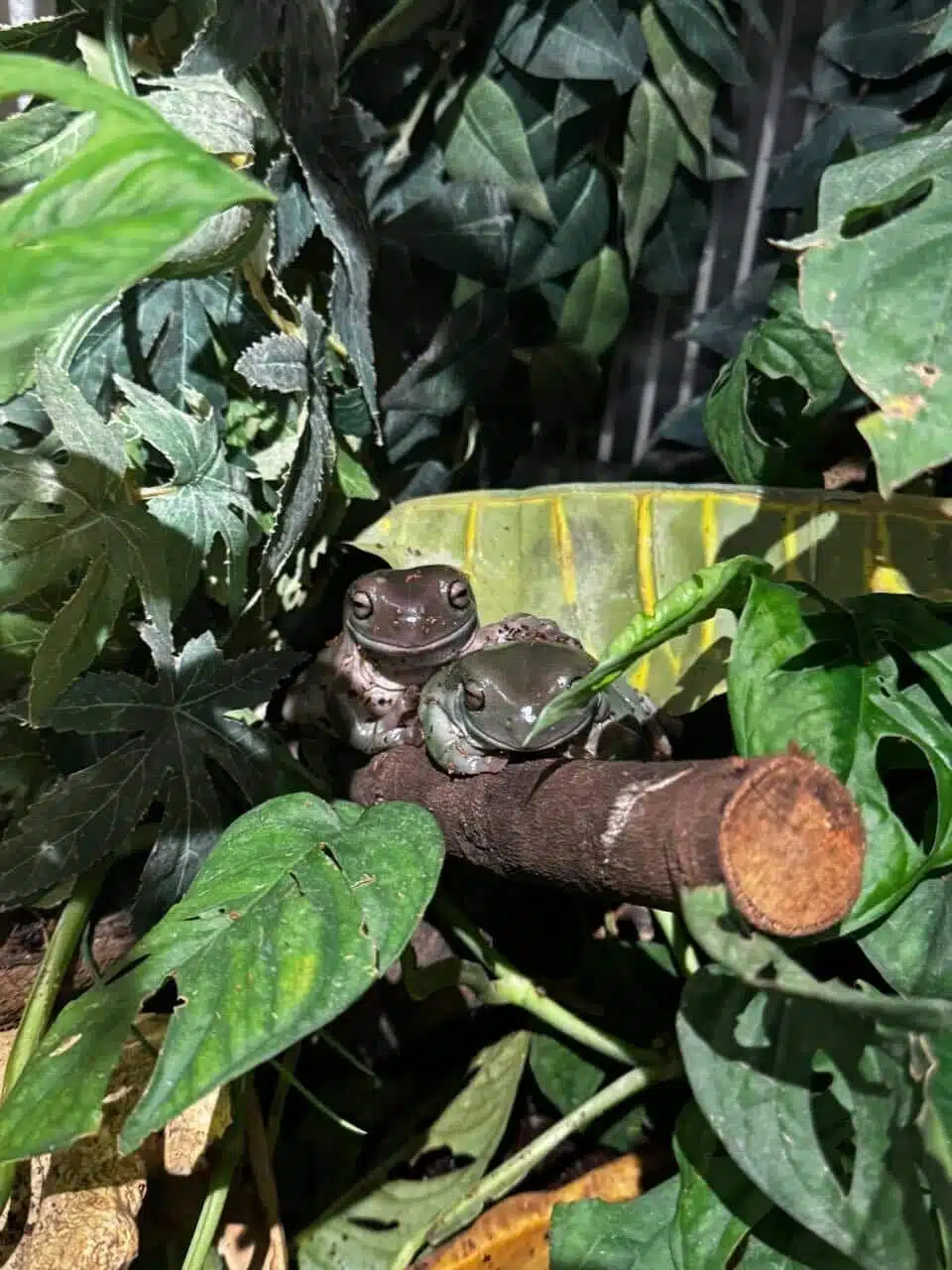
- Amphibians are part of the class Amphibia. These cold-blooded animals often start life in water and later move onto land. An amphibian typically lays eggs without any hard shell at all. Most amphibians have smooth skin and four legs.
- Fish belong to several classes of their own. These cold-blooded animals breathe using gills instead of lungs, so fish can live underwater for their whole lives. Most fish lay eggs directly in the water. A single shoal of fish can include thousands of individual fish, some of the most numerous animals in the sea.
Invertebrate Groups: Arthropods, Molluscs and Segmented Worms
Invertebrates are divided into many smaller groups, or phyla. The largest is Arthropoda, which includes insects, spiders, and other animals with jointed legs.
Arthropods range from microscopic mites to large crabs, and this single group makes up the majority of all known species. Insects alone account for a huge share of life on Earth. Scientists have identified more than a million insect species so far. Insect bodies are usually divided into three main parts.
Other invertebrate groups include molluscs, such as snails with a hard shell, and segmented worms, known scientifically as annelids. Vertebrate bodies are protected by an internal skeleton, but invertebrate bodies often have no hard skeleton inside at all. Even the smallest invertebrate bodies have adapted to survive almost everywhere on Earth. These animals make up the vast majority of life on this planet.
Learning Through Live Animals
At Wild Science, we believe the best learning experiences are interactive.
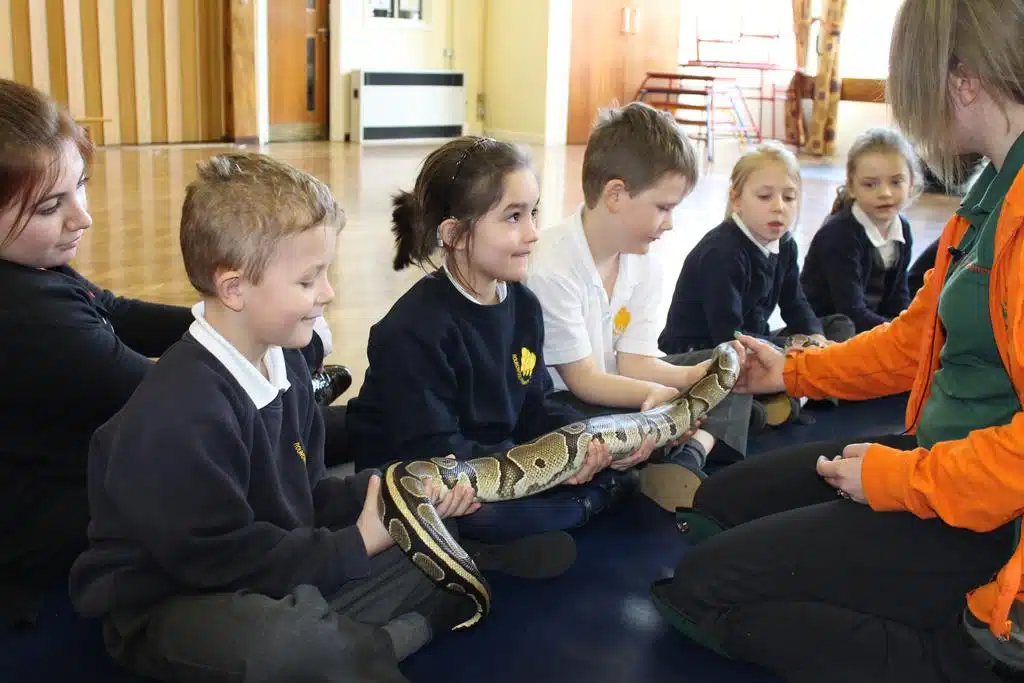
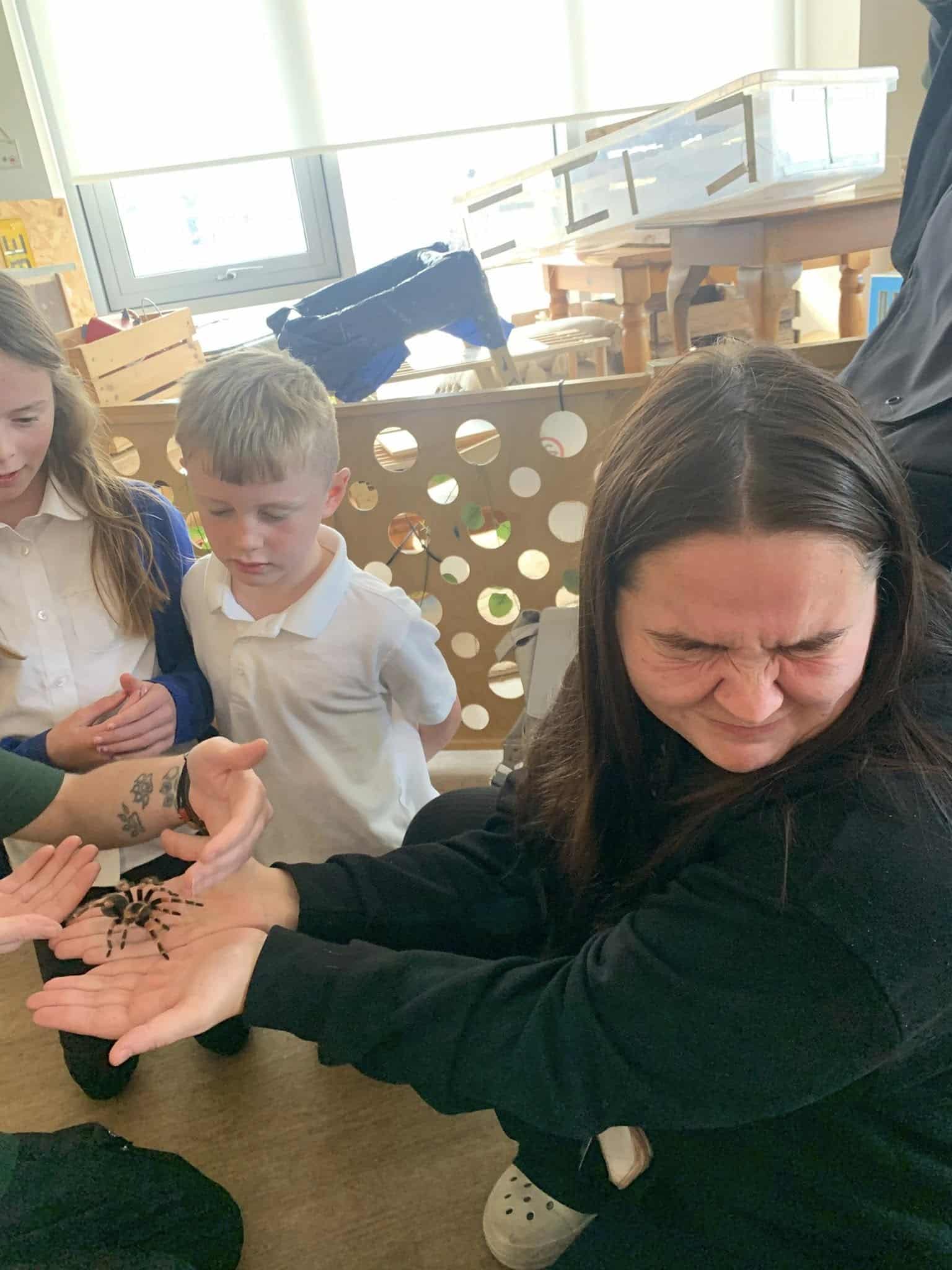
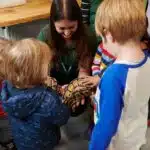
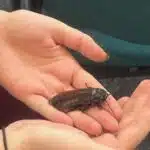
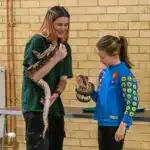
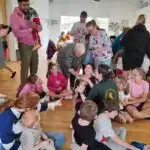
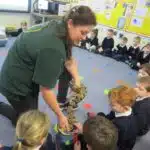
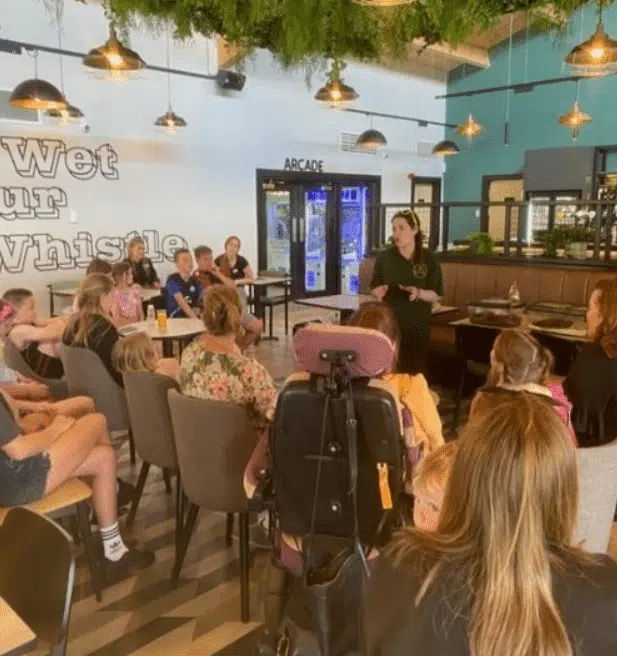
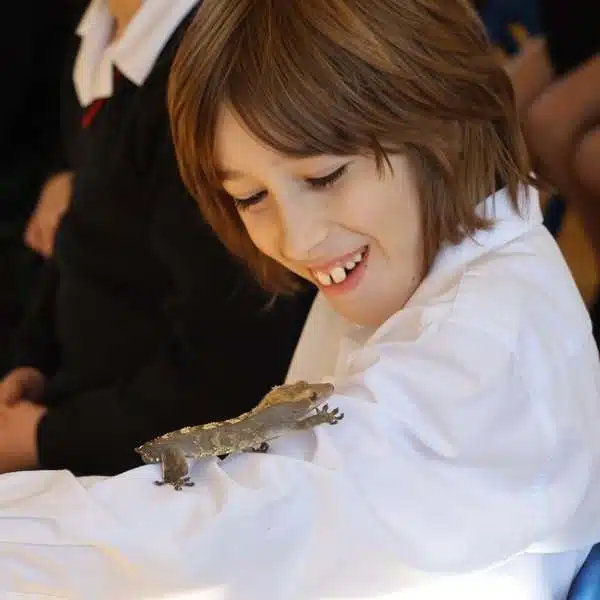
Our Animal Classification Workshop includes a variety of live animals from different classification groups. This gives students the chance to see real examples of scientific concepts in action. Every session brings students face-to-face with real animals, not just pictures in a book.
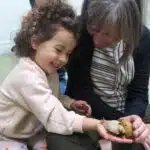
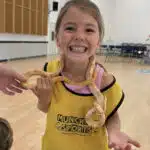
Students can observe the differences between mammals, reptiles, amphibians, and invertebrates. At the same time, they learn how each group is classified. Depending on group size and session format, students may also get the chance to handle some animals. This always happens under expert supervision.
This hands-on approach helps make complex scientific concepts easier to understand and remember.
What Is the Core Focus?
Our Animal Classification Workshop covers a range of curriculum-linked topics, including:
- What animal classification means, and why scientists classify living things
- The main animal groups, including vertebrates and invertebrates, and how animals are classified
- How a class, family, and species fit together in the wider system
- Arthropods and their characteristics
- Habitats and adaptations
- How appearance, habitat, and diet help identify and classify different species
- The importance of biodiversity in the natural world
The content is adapted to suit different age groups and educational levels.
For younger children, we introduce basic classification concepts through simple examples and interactive activities. For older students, we explore taxonomy in greater detail and encourage deeper scientific discussion. This also makes the session a useful addition to any classroom lesson plan.
Download our Activity Sheets here:
These downloadable resources are a handy way to extend the learning after the workshop ends.
What Animals Are Used?
This session includes a varied mix of mammals, reptiles, amphibians, and invertebrates. These animals each belong to a different classification group, helping bring the lesson to life.
Animals may include:
- Pythons
- Lizards
- Tarantulas
- Guinea Pigs
- Frogs
We always aim to provide a diverse range of animals to help demonstrate different classification groups. Our snakes, for example, are always handled by trained experts. Not all the animals in one group look alike, but they still share key features. Even so, every one can be classified using these same simple rules.
Please note that birds are not included in this particular workshop. This is one of the most common questions we receive, and we like to clarify this before the session.
While specific animals may vary depending on availability, our goal stays the same. We always aim to provide an engaging, educational experience that supports learning objectives.
In smaller groups, participants may enjoy a more hands-on experience. In larger groups, interaction remains highly engaging. However, direct handling opportunities may be more limited due to time and safety considerations.
A Final Note on Animal Diversity
Classification helps scientists make sense of all living creatures, from the smallest insect to the largest whale. It shows how millions of different animals fit into a single interconnected system. It also explains why some creatures look so different, even within the same class. This helps teachers group animals into clear categories for lessons.
Understanding these differences matters beyond the classroom too. Scientists use the classification of animals and their evolutionary relationships to track biodiversity. This helps protect creatures across the natural world, on land and at sea, for generations to come.
Recommended Session Duration & Ages
Our Animal Classification Workshop is ideal for children aged six years and above.
Classification is commonly introduced during Year 2. It becomes increasingly important throughout primary and secondary education. While younger children may find some concepts challenging, our experienced presenters adapt the workshop accordingly. They match the pace to the age and ability of the group.
We recommend sessions lasting between 45 minutes and 1 hour.
For larger schools and events, we can provide multiple sessions throughout the day. We also offer full-day programmes with up to six one-hour sessions, allowing pupils from different year groups to participate.
Frequently Asked Questions
What is an Animal Classification Workshop?
An Animal Classification Workshop is an interactive science session. It teaches students how scientists group living things, using real animals as examples. Using live animals, pupils learn about taxonomy, animal groups, and the characteristics used to classify different species.
Is the workshop suitable for KS2 pupils?
Yes. Animal classification is an important KS2 science topic. Our workshop supports curriculum learning while making the subject engaging and memorable.
What is the difference between vertebrates and invertebrates?
Vertebrates are animals with a backbone, such as mammals, reptiles, amphibians, birds, and fish. Invertebrates do not have a backbone and include insects, spiders, snails, and many other species.
What are the 7 classifications of animals in order?
The seven main levels are kingdom, phylum, class, order, family, genus, and species. Each level groups animals more precisely than the one before it, ending with a single species.
What is technically not an animal?
Living things such as plants, fungi, and bacteria are not animals. They belong to entirely different biological kingdoms, even though some, like fungi, are often mistaken for plants.
Can children handle the animals?
Where appropriate and depending on group size, children may get the chance to handle some animals. This always takes place under expert supervision.
How long does the workshop last?
Most sessions last between 45 minutes and 1 hour. For larger schools and educational events, multiple sessions can be arranged throughout the day.
Book Your Animal Classification Workshop
Bring the fascinating world of animal classification into your classroom with Wild Science.
Our Animal Classification Workshop combines live animals, interactive learning, and curriculum-linked science to create an unforgettable educational experience.
Contact our friendly team today to learn more about booking a workshop for your school, event, or educational group.