

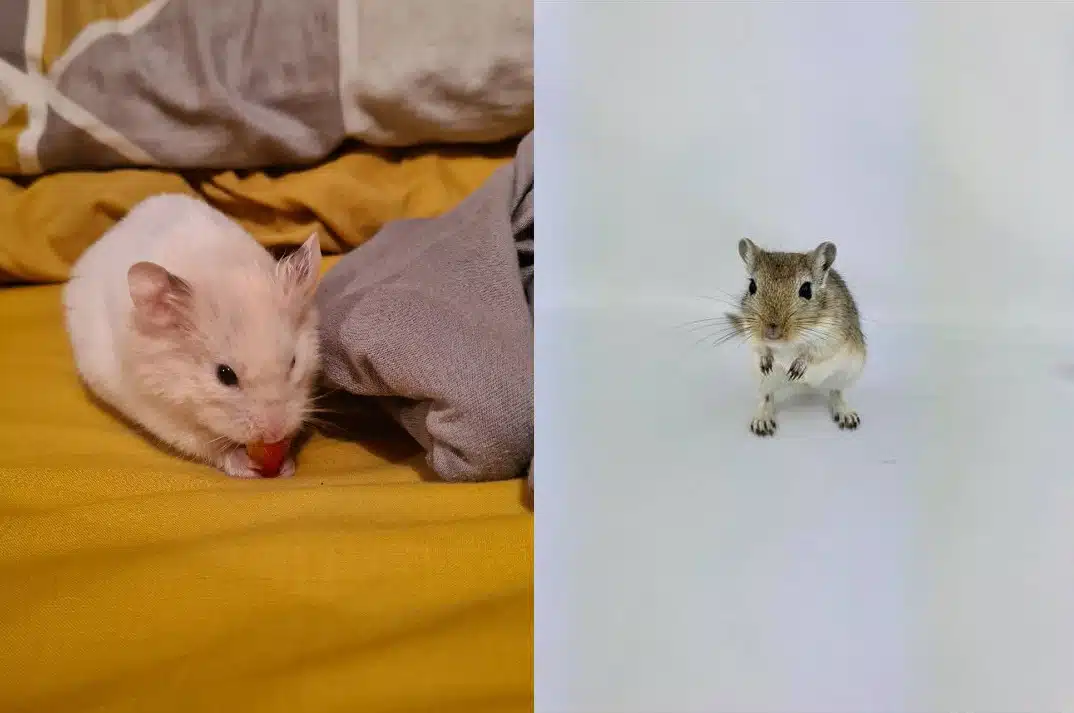


The question of gerbil vs. hamster is a common one for first-time pet parents. At first glance, these two furry friends look alike. However, they have very different habits and needs. Gerbils are social, active by day and usually live 3 to 4 years. Hamsters are mostly nocturnal, often live alone, and usually live around 2 years.
At Wild Science, we introduce children to small mammals through hands-on animal sessions across the UK. This guide shares the main differences between gerbils and hamsters. It also explains how guinea pigs compare.
Gerbil vs Hamster at a Glance
- Activity: Gerbils are active in the day. Hamsters are nocturnal.
- Company: Gerbils are highly social animals. Most hamsters prefer to live alone.
- Lifespan: Gerbils live 3 to 4 years. Hamsters live around 2 years.
- Tail: Gerbils have long tails. Hamsters have short, stubby tails.
- Home: Gerbils need deep bedding for burrowing. Hamsters need a solid floor and a quiet hiding spot.
Gerbils and Hamsters: What's the Difference?
Gerbils and hamsters are both small pets, and both are small rodents. However, they are not close relatives. Gerbils come from dry, desert-like places in Africa, India and Asia. Syrian hamsters, in contrast, come from Syria in the Middle East.
Both come in various species. Britannica lists more than 110 gerbil species and 18 hamster species. Each species has its own needs. With all this in mind, choosing the right pet starts with understanding these differences.
Gerbil vs Hamster: Physical Differences
The physical differences between gerbils and hamsters are easy to spot once you know what to look for. Gerbils have a slim, light body and pointy faces. In addition, they have long tails.
Hamsters, on the other hand, are rounder. They have short legs, a wider face and chubby cheeks. Those cheek pouches let them carry food back to their nest. A Syrian hamster can store up to half its body weight in its cheeks, according to the RSPCA.
Hamsters also have very short tails. Both Syrian hamsters and dwarf hamsters have tails that are easy to miss. A dwarf hamster is even smaller than a Syrian hamster. Overall, both pets are small enough to sit in your palm.
Gerbil vs Hamster Temperament
When it comes to personality, gerbils and hamsters are quite different.
Gerbils Are Social Animals
Gerbils are social creatures. In the wild, they live in family groups. As a result, pet gerbils do best in pairs or small groups of the same sex. They need daily social interaction with other gerbils. Keeping one gerbil alone is not a good idea, so plan for company from day one.
Hamster Temperament
Hamster temperament is more solitary. Syrian hamsters should live alone, as the RSPCA advises. Some dwarf hamsters can share a cage with the right care, but fights can still happen. When hamsters meet other hamsters, the dominant one can become very aggressive.
Because hamsters are nocturnal, they are often sleepy by day. They are also nervous of new sights, sounds and smells. When afraid, they hide in their burrow. Therefore, give a new hamster time to settle before you try to hold it.
Gerbil vs Hamster Energy Levels
Gerbils are usually diurnal. This means they are awake and active in the daytime. Gerbils love to dig, burrow and explore. Because of this, children are more likely to see them busy during the day.
Hamsters, however, are nocturnal. As nocturnal animals, most hamsters sleep through the day and wake up at night. Unlike gerbils, hamsters prefer a hiding spot where they can rest in peace. Waking a hamster suddenly can frighten it.
If you add an exercise wheel, choose a large, solid one with no gaps. This stops feet, legs and tails from getting trapped. Safe toys also keep both pets busy, so rotate the toys now and then.
Gerbil vs Hamster Hygiene
Both gerbils and hamsters are clean animals. Neither pet needs a water bath. Instead, gerbils roll in sand to clean their fur. Hamsters mostly groom themselves.
Meanwhile, both pets hoard food. As a result, you should check the cage every day. Remove any old or stale food before it spoils.
Housing and Diet
Housing is one of the biggest differences between these two pets.
Housing for Gerbils
Gerbils require deep bedding, because they are strong burrowers. The RSPCA suggests a layer 20 to 30cm deep. A glass aquarium style tank with a secure mesh lid suits them well. Wire cages are not a good choice, because gerbils can slip on the bars and hurt their feet. Gnawing on bars can also damage their teeth. Cage size matters for both pets, so choose the largest cage your space allows.
Housing for Hamsters
Hamsters also like to dig, so give them a thick layer of bedding. Choose a cage with a solid floor, because wire mesh floors can cause foot problems. Plastic cages are a better choice than wooden ones, which are not suitable. In addition, every hamster needs a dark nest box that is big enough to sleep in and store food. Offer several hiding places too.
Diet
Both pets need a balanced food made for their species. They also need fresh water at all times, ideally from a water bottle. Small amounts of fresh fruits and fresh veggies make a nice treat. Examples include pear, apple, cucumber and carrot. However, grapes are poisonous to rodents, so never offer them.
Gerbils should have fewer fatty seeds, such as sunflower seeds. Otherwise, they may put on too much weight. Finally, both pets' teeth never stop growing. Safe chew items help prevent dental issues. Health issues can also show up as changes in eating or drinking, so see a vet if you notice them.
Lifespan
Lifespan is another area where these pets differ. Gerbils live longer. The RSPCA says gerbils can live for three to four years, and some live even longer. Hamsters usually live for up to two years.
This matters when choosing a pet for a family. A gerbil is a longer commitment, so think about this before you decide.
Handling
Gerbils are quick and agile. They can be hurt by rough or careless handling, so gentle handling is key. Never lift a gerbil by its tail.
Hamsters can bite if they are scared. They also have poor eyesight, so approach them calmly. Wake a sleeping hamster slowly and speak softly first. For both pets, regular handling and daily gentle contact help them feel safe.
The RSPCA says an adult should always be responsible for a hamster's care. The same is true for gerbils. Therefore, children should handle either pet with an adult nearby. Older children can help with daily care, with an adult in charge.
Gerbils, Hamsters and Guinea Pigs
Many families also think about guinea pigs. How do they compare? Guinea pigs are quite different from both gerbils and hamsters.
First, guinea pigs are highly social. They are happiest in pairs, and other guinea pigs make the best company. Second, guinea pigs live longer. They typically live about five to six years, so they are a bigger commitment still.
Third, guinea pigs are active for up to 20 hours a day, with short sleeps in between. Finally, guinea pigs cannot make their own vitamin C. As a result, they need a regular supply in their diet. The RSPCA notes that guinea pigs are traditionally thought of as great first pets for children.
You can meet some of these small pets up close on our animal pages. Read about the gerbil, the hamster and the guinea pig. Our animal list is a guide, and the animals can vary by session.
Gerbils and Hamsters Are Great Pets, but Which One Is Right for You?
Gerbils and hamsters can both be great pets with the right care. Choose a gerbil if you want a social pet that is awake in the day. Choose a hamster if you want a quieter pet that is happy to be left alone.
Either way, think about time, space and who will care for the animal each day. Beyond that, remember that both pets rely on you for proper care. Whichever you choose, your new furry friends will count on you.