





More about Science of Sound Workshop
Science of Sound Workshop for Schools and After-School Clubs
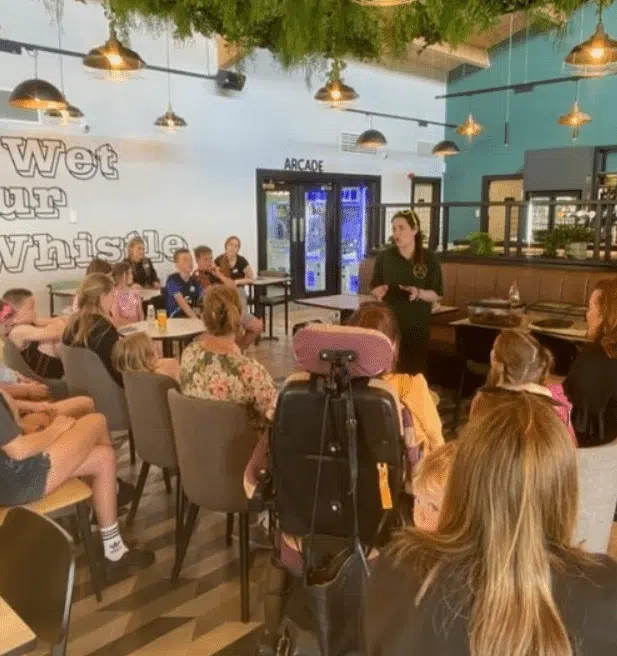
The Science of Sound Workshop is a hands-on, curriculum-linked school science workshop for children aged 6 and over. Pupils explore how vibrations make sound waves and how those waves travel through air, liquids and solids. Wild Science brings the workshop to your school, club or event.
Call 03301131136 or request a quote with your date, location and group size. We will check availability and plan the session with you.
- Ages: 6 and over, and we can adapt it for any age group
- Length: 45 minutes to 1 hour, or a full day of six 1-hour sessions
- Style: hands-on experiments, demonstrations and simple instruments
- Where: schools, clubs and community events across England, Scotland and Wales
- Safety: DBS-checked staff and a risk assessment with every booking
What Will Children Explore in the Science of Sound Workshop?
Every session is led by a Wild Science presenter. Children actively investigate the key ideas of sound science, including:
- How vibrations produce sound
- The link between frequency, pitch and wavelength
- How amplitude affects loudness
- How sound travels through different materials
- Resonance and sound amplification
What Hands-On Experiments Are Included in the Workshop?
This workshop is all about learning by doing. Children play, test and listen as they learn. Children will:
- Create sound using everyday materials
- Visualise sound waves through interactive demonstrations
- Build simple instruments to explore pitch and volume
- Test how sound behaves in different environments
All experiments are age-appropriate and safe. They are also designed to encourage questions and teamwork.
How to Book a Science of Sound Workshop
Booking a hands-on science workshop takes a few minutes.
- Call 03301131136 or fill in our contact form with your date, location, age group and group size.
- We confirm availability and agree the session length with you.
- Our presenter brings the workshop to your venue.
Why Should Schools Choose Our Science of Sound Workshop?
- An engaging, interactive learning experience
- Encourages critical thinking and problem solving
- Connects real-world experiences with scientific concepts
- Makes physics fun, accessible and memorable
- Builds understanding of how sound works
Sound is part of Year 4 science in the England national curriculum. Pupils learn how sounds are made, how vibrations reach the ear, and how pitch and volume change. The workshop covers these ideas. Please check it against your own scheme of work.
Our staff are DBS checked, and we hold public liability insurance of at least £5 million. We also carry out a risk assessment with every booking.
Want to know why schools book science days? Read how science workshops inspire young minds and how they build creativity and innovation in schools. Our sessions also support neurodiverse learners.
Science Workshops for Primary, Secondary and SEN Groups
Teachers can find out more about our primary school workshops, infant and junior school visits and secondary school sessions. For children with additional needs, see our SEN workshops.
We also run science workshops for schools on many other topics. You can browse every workshop on our experiments page. Looking for another physics topic? Try our science of flight workshop or our science of forces and magnets workshop.
Our blog on new science workshops on sound and flight explains how the topics fit together. Planning for March? See our ideas for British Science Week.
Science of Sound Workshop Length, Ages and Locations
Our Science of Sound Workshop is recommended for children aged 6 and older. The ideas can be tricky for younger children. However, we can adapt it for any age group.
We suggest sessions of 45 minutes to 1 hour. We are also happy to extend the time if you want to explore the topic in more depth. A full-day option has six 1-hour sessions, so it suits pupils of all ages.
We bring mobile Science of Sound workshops to schools and community events across England, Scotland and Wales. This includes Sheffield, Manchester, London, Hampshire and the surrounding areas. Tell us your postcode when you enquire, and we will confirm we can reach you.
Parents planning a celebration can book a workshop too. Our science birthday parties bring the same hands-on fun to your home or venue. We also offer home visits and sessions for scout groups and holiday and after-school clubs.
What Is the Science of Sound?
Sound is more than something we hear. It is energy in motion. Every sound starts when an object vibrates, such as a guitar string, a drum skin or your own voice.
In the Science of Sound Workshop, children see how vibrations create sound waves. They then explore how those waves move through air, liquids and solids. Guided experiments make these big ideas easy to see and understand.
At its core, the physics of sound is the study of mechanical waves. A vibrating object disturbs the surrounding medium, whether that is air, water or a solid material. This movement creates regions of high and low pressure, called compression and rarefaction. These regions travel outward as energy.
How Does Sound Travel? Sound Waves Explained
When an object vibrates, it pushes the air particles around it. Those air particles bump into their neighbours, and the push passes along like a ripple. This is how a sound wave travels from the source to your ears.
Longitudinal Waves and Transverse Waves
Sound waves are longitudinal waves. In a longitudinal wave, the particles move back and forth in the same direction that the wave travels. Transverse waves are different. In transverse waves, such as ripples on water, the particles move up and down across the direction of travel.
Sound Needs a Medium
A sound wave travels only through a medium, such as air, water or a solid. Sound moves through different mediums at different speeds. It usually travels faster through liquids and solids than through air. In air, the speed of sound is about 343 metres per second.
Unlike light, sound cannot cross empty space. There is no air in space, so sound cannot travel through a vacuum.
Echoes and Hard Surfaces
Sound waves bounce off hard surfaces, which creates echoes. For example, shout in an empty hall and your voice may come back. The longer the distance to the wall, the longer the echo takes to return. Soft materials absorb sound, so they make a room quieter.
Pitch, Volume and Frequency
Frequency tells us how many vibrations happen each second. Hertz (Hz) is the unit for frequency. A high frequency sound wave has a high pitch, like a whistle. A low frequency sound wave has a low pitch, like a drum. Every song uses a range of high and low sounds, and musicians use pitch to make music.
Amplitude, or intensity, tells us how big the vibrations are. A shout has a big amplitude, while a whisper has a small one. A bigger amplitude makes a loud sound, and a smaller one makes a quiet sound. Scientists measure the volume of a sound in decibels. Humans can hear a range of sounds from about 20 Hz to 20,000 Hz.
How Do We Hear Sound?
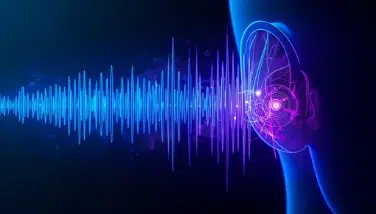
Our ears collect sounds and turn them into signals for the brain. Listen carefully, and you can pick out many sounds in the world around you. The ear has three sections: the outer ear, the middle ear and the inner ear.
- The outer ear collects sound waves and guides them inward.
- The sound waves make the eardrum vibrate.
- The middle ear passes these vibrations on to the inner ear.
- The inner ear changes the vibrations into electrical signals.
- Finally, the brain interprets these signals as the sounds we hear.
Easy Sound Experiments to Try at Home
You can explore sound at home with a few simple items. Ask children to predict what will happen before each test.
- Plastic cup telephone: join two plastic cups with a long piece of string. Pull the string tight, then talk into one cup. The string vibrates and carries the sound to the other cup.
- Rubber band guitar: stretch rubber bands over a box. When the strings vibrate, you hear different sounds. Shorter, tighter bands make a higher pitch.
- Hum test: put your fingers on your throat and hum. You can feel the vibrations from your voice. Hum higher and lower to feel them change.
- Ruler twang: hold a ruler over the edge of a table and flick the end. A short ruler makes a higher sound than a long one.
For more ideas, see our science experiments for kids at home and easy science experiments for children. You can also try children's fun science experiments. Older pupils can try our top 10 engaging scientific experiments or our science experiments for high school.
Free Science of Sound Activity Sheet
You can also download our free science of sound activity sheet to keep the learning going back in class.
Book the Science of Sound Workshop
Ready to book? Call 03301131136, Monday to Friday 9:00 to 16:30 or Saturday 9:00 to 15:00. You can also email [email protected].
Prefer to book online? Fill in our contact form with your date, location and group size. If you want a topic that is not on our website, tell us. We will create a customised session.