



Discovering the Reptile Corn Snake (Pantherophis guttatus)
The corn snake (Pantherophis guttatus) is the UK's most popular pet snake. It is gentle, lovely, and very easy to care for. Whether you're new to reptiles or an expert snake keeper, corn snakes offer everything you could want in a pet. They bring a calm nature, stunning colour morphs, and an easy size. Most corn snakes also live for 15 to 20 years, so they make a true long-term pet. With good care, a corn snake can do well in captivity for two decades.
At Wild Science, we work with corn snakes daily in our learning workshops across the UK. This complete corn snake care guide covers everything UK owners need to know. That includes housing, diet, UK rules, and where to buy responsibly.
With the right care, corn snakes make great pets for caring owners. This complete Corn Snake Care UK guide will help you learn everything from housing to feeding.
Corn Snake Origins and Natural Habitat
Corn snakes are commonly found in the southeastern United States. They live in many habitats, such as pine forests, hardwood forests, and farms. The corn snake's range goes from southern New Jersey to Florida. They also live in Louisiana and have spread to other areas. In the wild, corn snakes climb well. They often climb trees or shrubs to hunt or escape predators.
Corn snakes get their common name from two related ideas, both tied to farmland. The Oxford English Dictionary records the first idea as far back as 1675. Early American farmers often found these snakes near grain stores and overgrown fields. There, the snakes hunted the rodents that fed on harvested corn. The second idea points to the snake's belly instead. Its underside carries a checkerboard of alternating black and white marks, arranged in distinctive rows. These marks look like the kernels of colourful Indian corn.
The species' scientific name is Pantherophis guttatus. "Guttatus" means "spotted" in Latin, which matches the snake's spotted back pattern. Corn snakes were once placed in the genus Elaphe, alongside Old World rat snakes. Genetic research in 2002 showed this old grouping was not accurate. Scientists then moved corn snakes into the genus Pantherophis. That same research found corn snakes are closely related to kingsnakes. They are less closely tied to the rat snakes they were grouped with before. Corn snakes remain part of the wider rat snake family, known for strong climbing skills and rodent-hunting skills.
Want to see a live Corn snake?
Hire Wild Science across the United Kingdom. In the UK, these snakes have become increasingly popular pet snakes due to their manageable size, docile temperament, and striking appearance.
Corn snakes have specific care requirements that differ from traditional pets like cats or dogs. As a terrestrial species, a corn snake still needs constant access to fresh water. It drinks it and soaks in it during shedding.
What are the Physical Characteristics of a Corn Snake
Corn snakes are known for their beautiful and diverse colours and patterns, which make them really captivating to look at. Their usual features include:
- Base colour ranges from orange to red with black spots
- Distinctive spotted pattern in black or dark brown
- Smooth, glossy scales give them a sleek appearance
- Adults typically measure 3 to 5 feet in length
- Weight usually falls between 1 and 3 pounds
What sets them apart from Milk Snakes? While both species are beautiful, corn snakes tend to have spotted patterns rather than bands. They often display brighter, more vibrant colouration too. This distinctive look makes them particularly appealing to reptile enthusiasts and helps them stand out in educational displays.
During animal workshops, our handlers show how reptile scales reflect light. This creates a shimmering effect that delights kids and adults alike. Their beauty and calm nature make them great representatives for teaching about reptiles.
Are Corn Snakes Venomous?
No, corn snakes are not venomous. They are non-venomous constrictors that subdue their prey by constriction rather than using venom. Corn snakes are generally docile and pose no venom-related danger to people when handled responsibly.
Are Corn Snakes Good Pets?
Corn snakes make great pets. They bring joy to new and experienced reptile enthusiasts alike. Known for their gentle, friendly nature, these snakes suit people who are new to reptile care. They are mostly docile, so they are easy to handle.
Corn snakes also have low daily care needs compared with many other reptile species. They do not need big setups or special diets. Even so, keeping them well takes real work, mostly around temperature control.
Corn snakes are closely related to kingsnakes, part of the same wider snake family found across North America. Worldwide, they are the second most popular pet snake species, behind only the ball python. That popularity comes down to their calm nature and easy size.
Different Types of Corn Snakes
Corn snakes come in many different colours and patterns, which is one reason so many reptile owners find them interesting. Some have bright orange markings, while others are pale, grey, yellow, or almost completely white. Decades of selective breeding have produced these variations, which are known as "morphs" in the reptile world. Breeders continue to work with selectively bred lines today to develop new colour morphs each year.
A few common corn snake types seen in the UK include:
- Normal corn snakes with orange and red patterns
- Snow corn snakes with soft white and pink colours
- Butter corn snakes with yellow shades
- Ghost corn snakes with faded grey tones
- Albino corn snakes with bright red and white markings
Albino Corn Snakes: A Popular Morph
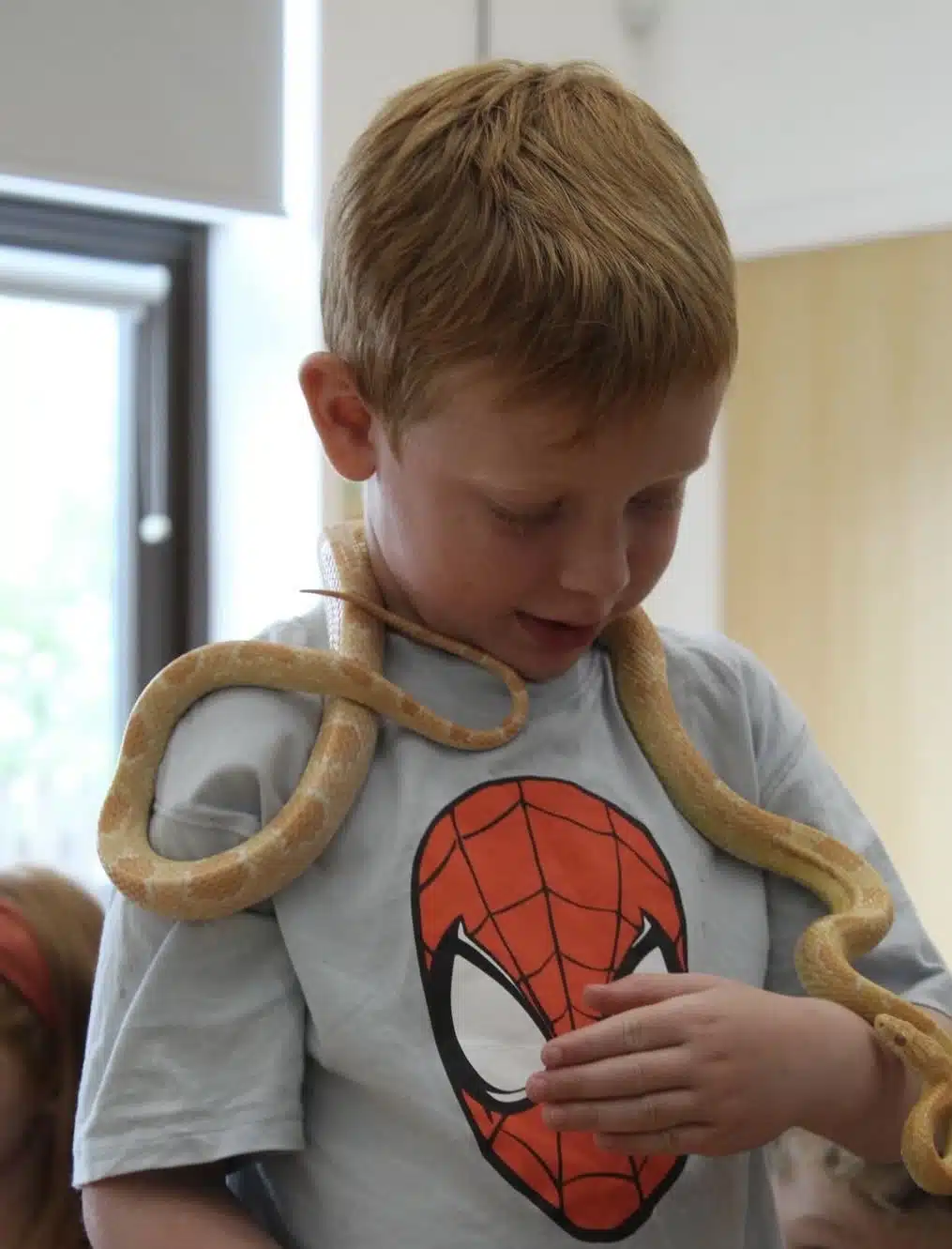
The albino corn snake is one of the most well-known morphs. People love it for its pale body and striking red-orange markings. Even though morphs look different, most corn snakes act in a similar way. They are usually calm and curious, and easier to handle than many people expect. During Wild Science reptile sessions, children are often surprised by how smooth and gentle these snakes feel up close.
Learning about different corn snake patterns can also help children learn basic ideas about genetics, adaptation, and animal diversity. Many families enjoy comparing the colours and markings of different snakes during our hands-on animal workshops and reptile encounters.
Corn Snake Habitat and Housing
When setting up a Corn Snake habitat in the UK, owners need to focus on temperature, humidity, and enrichment. A corn snake's basking temperature should be around 90°F (32°C) to help it regulate its body temperature effectively.
Here are the main things every UK reptile owner needs to know, based on our expert's experience with reptiles in our Wild Science collection.
(A) Corn Snake Enclosure Guide (UK Owners)
1. Your Snake's Enclosure Size
- Adult corn snakes require an enclosure of at least 150 litres (a larger enclosure is preferable).
- Provide enough floor space and vertical space for climbing and exploring.
A well-designed enclosure gives your corn snake room to move, climb, and thermoregulate.
2. Substrate Options
- Soil and sand mixture
- Cypress mulch (organic landscaping ground cover)
- Paper towels (easy to clean for beginners)
3. Temperature and Humidity
- Temperature gradient: 75–85°F (24–29°C), with a clear warm side and cool side so the snake can move between them
- Basking spot: 88–92°F (31–33°C)
- Humidity: 40–60% (increase slightly during shedding)
Keep the enclosure out of direct sunlight. A glass or plastic vivarium can overheat fast, putting the snake at risk over extended periods. Fit any heat mat with a proper thermostat and cover to prevent burns.
4. Lighting
- A UV lamp is beneficial but not essential for corn snakes
- Ensure a natural day and night cycle
(B) Hides and Enrichment
- At least two hide boxes, one on the warm side and one on the cool side
- Add branches and climbing structures for mental stimulation
- Rotate decorations to keep the snake engaged
(C) Essential Equipment for UK Homes
- Heat mats or a ceramic heat emitter, fitted with a thermostat
- Digital thermometer and hygrometer
- Water dish, large enough for soaking, kept topped up with fresh water
- Climbing branches or enrichment items
Here's a tip from our workshops: Many families don't know that snakes also need mental activity. Giving them things to climb and changing their enclosure layout can make their lives much better. Our expert suggests changing decorations and adding new climbing things sometimes to keep your snake interested and moving.
What Do Corn Snakes Eat? A Guide to Their Carnivorous Diet
Corn snakes are obligate carnivores, so their diet must consist entirely of animal protein. In the wild, adult corn snakes mainly feed on small mammals, birds, and bird eggs. Wild juvenile corn snakes also eat amphibians and other reptiles, such as small lizards and frogs. They move on to rodent prey as they grow.
A balanced corn snake diet in the UK typically consists of frozen-thawed mice or rats. Feeding frozen-thawed prey rather than live prey protects both the snake and the animal being fed. Adult corn snakes should be fed every 7 to 14 days to prevent overfeeding.
Feeding Guidelines for UK Owners:
- Prey type: Frozen or thawed mice or rats, never live prey
- Frequency: Every 7 to 14 days for adults, every 5 to 7 days for juveniles
- Prey size: Should be 1 to 1.5 times the width of the snake's body
- Feeding method: Use tongs to offer prey; never hand-feed
Common Food and Feeding Issues:
- Refusing food: Can occur during shedding, illness, or stress
- Regurgitation: Usually indicates prey too large or handling too soon after feeding
- Seasonal changes: May eat less during winter months
Important safety note: Always wait 48 to 72 hours after feeding before handling your snake. This helps prevent regurgitation and stress. Skipping this step is a common new-owner mistake, and it can lead to serious health issues.
Baby Corn Snakes: Feeding as They Grow
Corn snakes need different food and prey sizes as they grow. A baby corn snake usually eats very small pinky mice. Adult corn snakes need larger mice or small rats to maintain a healthy weight. Feeding the wrong food size can lead to health problems, stress, or digestion issues.
As a general rule, prey should be slightly wider than the thickest part of the snake's body. Younger snakes also need feeding more often, since they are still growing.
If you're unsure what prey size or schedule suits your corn snake's age, see our recommended corn snake feeding chart.
Learn more about how to take care of your little scaly friend. Click here to view our recommended care guide.
Corn Snake Health and Care in the UK
Like all captive reptiles, corn snakes can experience health issues. Regular monitoring and preventive care are essential for maintaining their well-being. Most health issues in captivity come down to incorrect temperature or humidity.
Signs of Good Health:
- Clear eyes (except during shedding)
- Smooth, glossy scales
- Regular feeding and a healthy interest in food
- Active behaviour, especially in the evenings
- Clean vent with no swelling or discharge
Common Health Concerns in UK Collections:
- Respiratory infections: wheezing, open-mouth breathing, nasal discharge
- Mites: tiny black dots, excessive soaking
- Scale rot: red or damaged scales from poor humidity
- Inclusion body disease: fatal viral infection, urgent veterinary care needed
When to See a Vet
- Refusal to eat for long periods
- Lethargy or unusual behaviour
- Visible injuries or swelling
- Consistent shedding issues
- Any change in appearance or breathing
In the UK, it's worth finding a vet who specialises in reptiles. Not all veterinary practices have experience with snakes.
Reptile Corn Snake Breeding and Conservation
Captive corn snakes are relatively easy to breed, which has helped reduce pressure on wild populations. Responsible breeding practices are still essential for healthy populations and for preventing genetic issues.
Corn snakes reach sexual maturity at around 16 to 18 months old. Even so, responsible UK breeders wait until females are older and larger before pairing them.
Breeding Considerations:
- Age: Females should be at least 3 years old and 3 feet long before breeding
- Season: Breeding typically occurs in spring
- Egg laying: Females lay 10 to 20 eggs, 30 to 45 days after breeding
- Incubation: Eggs require 60 to 65 days at 82–84°F (28–29°C)
Conservation Status and UK Responsibility:
Conservation note: Corn snakes are not currently listed as endangered. Even so, habitat loss and pet-trade collection can impact wild populations. Supporting captive-bred individuals helps protect them.
Our commitment to conservation: At Wild Science, we use our educational programmes to raise conservation awareness among children and families. Our workshops support wild populations rather than draw from them.
Pet Snake: Buying a Corn Snake in the UK
Corn snakes are an ideal choice as a reptile companion. When selecting a corn snake in the UK, consider these important factors. They will help ensure you bring home a healthy corn snake that settles in well.
Where to Purchase a Corn Snake in the UK:
- Reputable breeders: Ensure captive-bred animals with a clear history of care in captivity
- Pet stores: Verify the source and health of animals
- Rescue organisations: Consider adopting an adult snake
- Avoid: Wild-caught animals or questionable sources
What to Look For When Selecting a Healthy Corn Snake:
- Clear eyes: No retained eye caps
- Smooth scales: No damage or parasites
- Active behaviour: Responsive to handling
- Good body condition: No visible ribs or spine
- Clean vent: No discharge or swelling
Essential Questions to Ask UK Corn Snake Sellers:
- What is the snake's age and history?
- Has it been feeding regularly?
- Are there any known health issues?
- What is the current feeding schedule?
- Can I see the parents, if captive-bred?
Once you bring your new snake home, give it a week or two to settle in a quiet room. Then start a regular handling routine.
Did you know the red rat snake is another name for the corn snake (Pantherophis guttatus)?
How Much Does a Corn Snake Cost in the UK?
Understanding the full cost of corn snake ownership is essential before committing. Here is a realistic breakdown for UK buyers:
One-off setup costs:
- Corn snake (captive-bred hatchling): £40–£150 depending on morph
- Enclosure or vivarium (minimum 120cm for adults): £80–£200
- Heating (under-tank heater plus thermostat): £40–£80
- Hides, water bowl, décor: £20–£50
- Digital thermometer and hygrometer: £15–£30
Ongoing monthly costs:
- Frozen mice, for food (pack of 10 to 20): £5–£15 a month
- Substrate replacement: £3–£8 a month
- Electricity for heating: £5–£15 a month
- Vet costs (annual checkup recommended): £30–£80 a year
Total first-year cost: approximately £250 to £600, depending on setup quality.
Corn Snake Legal Requirements (UK)
Before acquiring a corn snake in the UK, it's essential to understand the legal requirements. Owners also carry real responsibilities.
Current UK Regulations
- No licence required: corn snakes are non-venomous and are not restricted under the Dangerous Wild Animals Act 1976.
- Animal Welfare Act 2006: You must provide a suitable environment, diet, and veterinary care so the snake does not suffer.
- Local bylaws: Check with your local council, as some areas may have additional rules about keeping reptiles.
- Housing rules: If you rent, your landlord or tenancy agreement may restrict or prohibit exotic pets, including snakes.
Responsible Ownership
- Lifetime commitment: Corn snakes can live for 15 to 20 years in captivity, so be prepared for long-term care.
- Financial responsibility: Consider the ongoing costs of housing, heating, food, and potential vet bills.
- Time commitment: Regular feeding, cleaning, and occasional handling are needed to keep your snake healthy and tame.
- Emergency planning: Have a trusted person or plan in place to care for your snake during holidays, illness, or emergencies.
Educational Benefits of Corn Snakes for UK families
From our workshop experience: Corn snakes offer real educational value for children and families. During our Wild Science workshops across London and the South East, these snakes help teach science, responsibility, and conservation.
What children learn:
- Biology: Understanding reptile anatomy and physiology
- Ecology: Learning about food chains and habitat protection
- Patience and gentleness: Snakes move and eat on their own schedule, so handling them well takes care
- Observation and research: Noticing behaviour and understanding proper care requirements
Children who engage with snakes often develop a greater respect for wildlife. Many parents also report more confidence and curiosity about science after our workshops.
Dispelling Common Myths about Corn Snakes
Let's address common misconceptions about corn snakes, ones our animal experts frequently meet during UK workshops and consultations.
Myth: "Snakes are slimy"
Reality: Snake scales are dry and smooth. The "slimy" feeling some people expect comes from their smooth, cool scales. During our workshops, our experts often invite participants to gently touch the snake's scales to experience this for themselves.
Myth: "Snakes are aggressive"
Reality: Corn snakes are among the most docile snake species. When they feel threatened, a corn snake is more likely to rattle its tail against dry leaves, mimicking a rattlesnake. They rarely bite, which makes them excellent for beginners.
Myth: "Snakes need to eat live prey"
Reality: Frozen or thawed prey is safer, more convenient, and more humane than live prey. This is especially important in the UK, where live feeding is generally discouraged.
Myth: "Snakes don't bond with their owners"
Reality: While snakes don't bond like mammals, they can recognise their owners and become comfortable with handling. Many of our workshop participants are surprised by how responsive these animals can be.
Myth: "Snakes are low-maintenance pets"
Reality: While they don't need daily walks, snakes require proper temperature, humidity, feeding, and cleaning. This misconception often leads to improper care and health issues.
Key takeaways for UK owners:
- Corn snakes are distinct from milk snakes and closely related to kingsnakes
- They need specific temperature and humidity conditions in the enclosure, with a warm side and cool side
- Proper food and handling are essential for their well-being
- They offer excellent educational opportunities for children
- Responsible ownership takes commitment and research
Whether you're considering your first reptile pet or expanding your collection, corn snakes offer a rewarding experience. With proper care, it can last for decades.
What Wild Science Families and Schools Say
You can read our clients’ reviews here to better understand Wild Science's exceptional service.
About the Team: Susie Gormley, Senior Animal Expert at Wild Science
Susie Gormley is a Senior Animal Expert at Wild Science, experienced in handling and presenting corn snakes and other reptiles. She leads animal encounters, school workshops, and educational sessions across Scotland. That coverage spans Glasgow, Edinburgh, Aberdeen, Inverness, Stirling, Perth, and Dundee.
Susie has introduced hundreds of children and adults to corn snakes for the first time. She works to dispel fears and build genuine appreciation for these animals. This guide draws on her daily experience caring for and presenting corn snakes in real UK settings.
→ Click here to view Susie's full profile
How to book the best Reptile Experience in the UK
Ready to meet amazing animals like Corn Snakes up close? Book a Wild Science workshop for your school, birthday party, or special event! And bring Corn Snakes and other animals straight to your event.
Our workshops feature:
- Hands-on animal encounters with expert guidance
- Educational content aligned with the school curriculum
- Safe, supervised interactions for all ages
- Professional equipment and materials
- Flexible scheduling across London and the South East
Please note that the list of animals we bring to events may vary, and we cannot guarantee the presence of any particular animal species.
Related Services:
- School Workshops: Curriculum-aligned science and animal education
- Birthday Parties: Memorable animal encounters for special celebrations
- Corporate Events: Team-building experiences with wildlife
- Care Home Visits: Therapeutic animal interactions for residents
- Private Consultations: Expert advice on pet care and animal behaviour
Service Areas: London, Kent, Surrey, Sussex, Hampshire, Berkshire, and throughout the South East of England
Available for: Schools, birthday parties, corporate events, care homes, and special events.
For more details, up-to-date prices, and to make a booking, please call us or reach us on WhatsApp.